Inside Columbia’s Postbaccalaureate Premedical Program [Episode 633]
Career changers who decide to pursue medicine face a practical question: how can they complete the science prerequisites, prepare for the MCAT, gain clinical experience, and navigate medical school admissions without getting lost in the process?
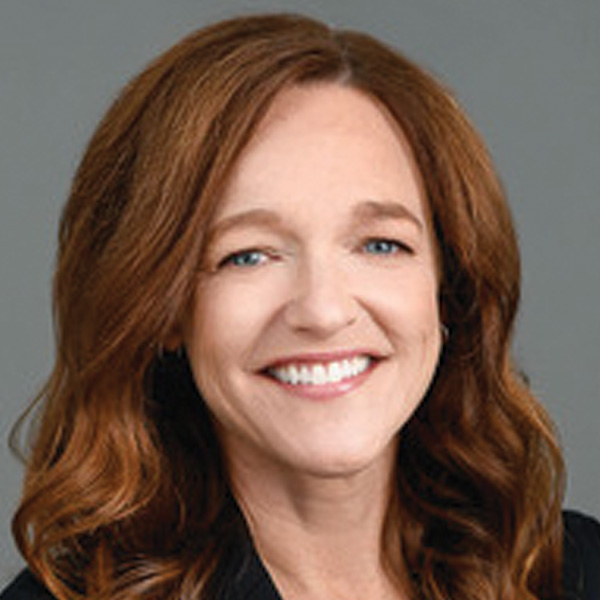
In Episode 633 of Admissions Straight Talk, Accepted admissions consultant Dr. Valerie Wherley speaks with Dr. James Colgrove, dean of the Postbaccalaureate Premedical Program at Columbia University’s School of General Studies. Their conversation explores how Columbia’s career-changer program combines rigorous science coursework with individualized advising, academic resources, peer support, and access to a broad professional network.
Table of Contents
Who Is Columbia’s Program Designed For?
Columbia’s Postbaccalaureate Premedical Program was founded in 1955 within the School of General Studies, a Columbia undergraduate college created in 1947 to serve returning World War II veterans looking to use their GI Bill education benefits. That history still shapes the school’s mission: serving students whose educational and professional paths have not followed a traditional sequence.
The program has approximately 300 students, with an entering cohort of about 100 each year. Students can begin in the spring, summer, or fall. Some arrive after spending years in another profession; others enroll soon after earning a bachelor’s degree because they changed direction too late to complete the premedical prerequisites as undergraduates.
Columbia’s program is intended for career changers, not applicants seeking academic enhancement after completing most of the prerequisite sciences. Candidates who have already taken all or most of those courses are not eligible. The program awards a certificate in premedical sciences rather than a degree.
How Do Rigorous Coursework and Structured Support Prepare Career Changers?
postbac students take the same biology, chemistry, and physics courses as Columbia undergraduates. The curriculum emphasizes problem solving and analytic reasoning rather than relying primarily on memorization, helping students develop skills that support both MCAT performance and later medical school coursework.
MCAT preparation extends beyond the classroom. The program has negotiated discounted rates with two MCAT preparation companies, but participation is optional. Students can choose the approach that fits them, whether that means a course, independent study, or individual tutoring.
The program’s support structure is equally important. Three full-time premedical advisors guide students during their studies as well as the medical school application process. The Academic Resource Center offers peer tutoring from students who understand how Columbia’s courses are taught, along with support in areas such as time management and effective study groups.
Students can also learn from MCAT panels, enter a student mentorship “buddy” program, build relationships through an alumni networking program, and participate in the Postbac Premed Student Council and its special interest groups. Each February, the student council organizes a Medical School Fair that brings students together with representatives from medical schools.
When Does Linkage Make Sense?
A linkage agreement allows a qualified postbac student to apply to a partner school in January and, if admitted, begin that August. This accelerated route removes the usual application year between completing the postbac curriculum and starting medical school. Columbia has linkage agreements with ten medical schools and one dental school.
The faster timeline comes with meaningful trade-offs. A linkage applicant can apply to only one school, and an offer of admission is binding. The process also takes place during the postbac student’s final semester, creating a demanding stretch in which the applicant may be balancing advanced coursework, the MCAT, application materials, and interviews.
Linkage can suit a postbac student with strong academic and clinical credentials who has identified one partner school as an especially good fit. Students who want to compare a broader range of medical schools may prefer the general application cycle. An unsuccessful linkage applicant can move into the next general cycle on the timeline they would have followed without linkage.
How Should Students Use the Glide Year?
“Glide year” is another name for the medical school application year – the period between submitting an application and matriculating. The term can be misleading because this year can be “quite demanding,” according to Dr. Colgrove.
Many students use this time to deepen their clinical or research experience through paid work, part-time roles, or volunteering. Others pursue upper-level coursework in areas such as virology or genetics. Dr. Colgrove also describes a student completing a Fulbright research project overseas. Whatever the choice, med school applicants should be prepared to explain how the experience is helping them grow into better medical students and physicians.
What Makes an Application Competitive?
Columbia does not seek a single academic or professional profile. Applicants come from the arts, humanities, social sciences, finance, and science, technology, engineering, and mathematics fields. The program does, however, look for evidence that a candidate can handle demanding coursework. Dr. Colgrove notes that successful applicants tend to have a grade point average around 3.65.
Candidates should also have had enough clinical exposure to test their interest in medicine. A large volume of experience is not required, but physician shadowing, clinical volunteering, or another firsthand view of patient care can show that the decision is informed rather than abstract.
Finally, the personal essay should explain the applicant’s motivation with clarity. The specific catalyst may be a personal or family experience, a commitment to a social or political issue, or exposure to medicine through someone close to the applicant. What matters is demonstrating that the candidate has reflected carefully on the demands and rewards of the profession.
New episodes of Admissions Straight Talk are released every other Thursday on all major streaming platforms, with full video episodes available on Accepted’s YouTube channel.
If you are considering a postbac program or applying to medical school, sign up for a free consultation with an Accepted admissions expert.
Related Resources
- Dr. James Colgrove, Columbia School of General Studies
- Columbia Postbaccalaureate Premedical Program
- Columbia Postbaccalaureate Premedical Program Linkage Admission
Related Episodes