Inside Baylor College of Medicine: Admissions, Curriculum, and What Makes a Strong Applicant [Episode 618]
What does it take to get accepted to a top medical school like Baylor College of Medicine, and what should applicants really know about the program?
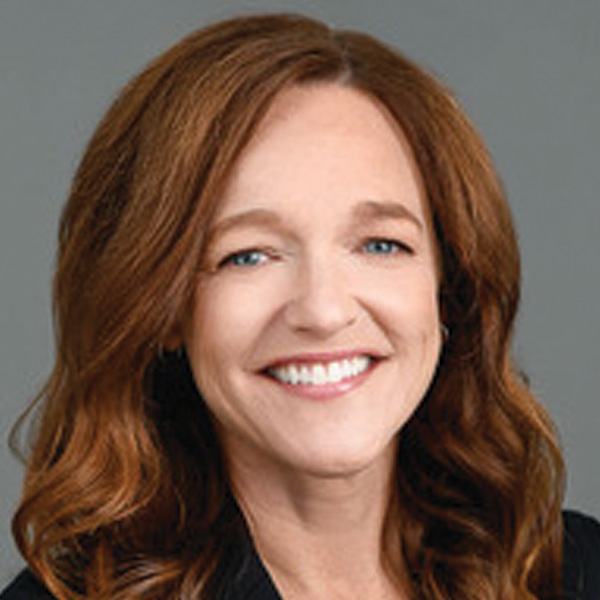
In this episode of Admissions Straight Talk, Accepted consultant Dr. Valerie Wherley sits down with Dr. Jesus Vallejo, senior associate dean of admissions at Baylor College of Medicine, to explore what makes Baylor unique – from its dual-campus experience to its early clinical exposure, mentoring programs, and holistic admissions process.
Dr. Vallejo shares valuable insights into what Baylor looks for in applicants, how students are supported throughout their medical education, and why fit, service, and reflection matter just as much as metrics.

Table of Contents:
- Baylor College of Medicine: Houston versus Temple Campus Experience
- In-State versus Out-of-State Admissions at Baylor College of Medicine
- Early Patient Exposure at Baylor College of Medicine
- Baylor College of Medicine’s Modern Curriculum and Learning Style
- Research Requirements for Baylor College of Medicine Applicants
- Baylor College of Medicine’s Mentorship and Student Support Programs
- Baylor College of Medicine’s HEAL Program: Humanities in Medicine
- What Baylor College of Medicine Looks for in Applicants
Baylor College of Medicine: Houston versus Temple Campus Experience
Welcome to the podcast. It’s a pleasure to have you.
Thank you. I’m glad to be here.
I’d like to start by talking about the location of Baylor, which is in Houston and Temple, Texas. Can you talk a bit about both campuses as a learning environment and cities offering tremendous cultural diversity?
I’ll start a little bit by telling you that up until 2023, we were only in Houston, but in 2023, we opened our Temple Regional Campus. Both campuses offer a strong learning environment. It’s just in a different way. If you’re in the Houston campus, obviously you’re in the middle of a big traditional academic medical center versus the Temple Campus where there is a more sort of close-knit community where students are able to build relationships with faculty and have a lot of meaningful experiences. There are 186 students in the Houston campus and 40 students in the Temple campus for a total of a class of 226. What I always tell students when they ask about the differences, obviously the location, like you mentioned, the size of the city, but I always emphasize that what’s most important is that both campuses are going to provide you with an excellent medical education. The curriculum is exactly the same whether you’re sitting in Houston or whether you’re sitting in Temple, Texas. Students are supported, they’re challenged, they’re well prepared at either location. And each campus has a very unique opportunity for students to get those skills that they will need to become a compassionate physician.
In-State versus Out-of-State Admissions at Baylor College of Medicine
That’s wonderful. And I would like to talk about your program’s admission and matriculation data. As we know, Baylor has become a very competitive program. In 2024, you admitted a class of 226 students, and 88 % of them were Texas residents. Would you say that your school prefers to train in-state students, or is that not a fair statement?
I think that at Baylor we’re proud to train students from Texas and from across the country. You’re right, a large proportion of our class does come from the state of Texas, but that’s largely because we receive an exceptionally strong pool from within the state. We’ll get 6,000 applications, 4,000 of those are from Texas residents, and a little bit over 2,000 are from outside the state of Texas. Our goal in the admissions office is not to prefer one group over another, but rather to build a talented, compassionate class, future physicians that are going to be a good fit for Baylor and that are going to serve the communities that we want to serve. So, while yes, there’s a lot of connection with students in Texas, we really are looking for assembling a sort of geographically diverse and capable group of learners who will have a meaningful impact in medicine. If you’re not from the state of Texas, I encourage you to still apply. I know that it’s only 11% of the class that is from here, but sometimes it’s 15%, sometimes it’s 20%. It just depends on, like I said, how good is that fit for us, right? Because we’re here to tell you what we can offer you as a medical student, but at the end of the day it has to be a good fit. We want to make sure that the students that come here to Baylor are going to thrive in our learning environment.
That’s really good to know. My out-of-state students will be happy to hear that.
Early Patient Exposure at Baylor College of Medicine
And as you know, premed students are consumers. They’re looking for interesting parts of your curriculum. And to that end, I’d like to talk about a piece of your foundational sciences curriculum, where students have the opportunity to have one-on-one patient contact quite early in their MS1 year. I’m hoping you can tell our listeners about why you’ve decided to integrate this so early and if you see it as being a positive pedagogical item.
Baylor has always had a curriculum that exposes medical students really early on to patients. I was a student at Baylor back in the ‘80s, and we were one of the few schools that had an 18-month foundational curriculum, so we got to the clinics pretty early. So if you’re going to get the students to the clinics pretty early, you need to start giving them that interaction with patients really early on.
So now in the current curriculum, during the first 15 months of the first year and sort of going into the second year, students will be learning the course, scientific concepts behind health and disease, but they’re also introduced really early on to one-on-one patient contact. And the reason for that is pretty straightforward. When students meet patients early on, it gives them meaning and context to what they’re learning in the classrooms instead of just studying conditions in abstract and then trying to figure out what that really means with the patient. We found that that works really, really well. It gives students the opportunity to develop those communication skills that are so important and those clinical skills early on. It helps them connect what they’re learning in the classroom, in the foundation of sciences with the human side of medicine. We found that to be really, really positive. It’s something that our students really like, and it’s a big selling point of the program.
I think that we are seeing, you know, in this next generation of students, they’d much rather be hands-on than sitting in a didactic classroom.
We don’t want to call it a new curriculum because we’ve been in it for three years, but there are hardly any lectures in this curriculum that we have now. Pretty much everything is self-directed learning, problem-based learning, large group interactive sessions. It’s not like when I went to medical school, then you would arrive at eight and you would sit in the classroom just listening to lecture after lecture after lecture for hours on end. That has changed quite a bit. And so I think that’s one of those things that our students like about the curriculum it’s also very, very flexible.
I am sure that students must really like that.
Baylor College of Medicine’s Modern Curriculum and Learning Style
Moving on to your clinical affiliations, as opposed to some schools where students have to travel quite distances to see some really interesting clinical rotations, you have several teaching hospitals within the Texas Medical Center, which are all in close proximity, including Texas Children’s Hospital, Baylor St. Luke’s Medical Center, the VA Medical Center, and Baylor Scott & White Health, just to name a few. That’s actually a short list. On your website it keeps going and going. It would be helpful for our listeners to understand the definition of a teaching hospital and its role in educating students during the clinical years.
The most simple definition of what a teaching hospital is, is a hospital that really partners with the medical school, and they’ll teach the next generation of physicians, and that includes medical students, residents, and there may be even professional schools. Nursing schools, pharmacy schools can also be there. Hospitals usually are involved in patient care, education, and research, and all that happens side by side. So that’s the traditional definition of a teaching hospital versus if you go to a private hospital that’s not affiliated with a medical school then you’re probably not going to see any residents or medical students.
So here at Baylor College of Medicine, our students, like you mentioned, complete their clinical training at very different institutions. You mentioned the ones that are located in the Texas Medical Center, but also we have a large health system here in Temple, Texas. One of the unique aspects of the regional campus is that the students really don’t have to travel very far because the large hospital that’s about 700-plus beds, it’s right across the street from the medical school. And the freestanding Children’s Hospital in Temple is also located right across the street from the medical school. So in terms of accessibility, it’s almost the same as when you’re in the Texas Medical Center, that all the hospitals are in the same area. And so really what makes teaching hospitals special is that students are learning directly from the physicians who are actively caring for patients, right there at the bedside.
And so our students, during the clinical year, they become part of the team that’s taking care of the patient. They participate in discussion of cases with residents, with faculty members, and they learn how to make medical decisions in real time. So that’s the important thing that they need to learn as they sort of move on through their undergraduate medical education. I can tell you that the environments here are very hands-on, and we believe that that’s really the way to learn medicine. And so the students being part of the clinical teams is where they really start bringing everything together. “Okay, so I learned this during one of my lectures or I learned it reading, but now I understand how everything works.” You’re right that the number of opportunities in the different hospitals that we have at both campuses is up.
It’s really an opportunity where students get to put those pieces of the puzzle together in a supervised environment with somebody who’s a physician and a faculty member kind of all wrapped up into one, which is amazing.
Research Requirements for Baylor College of Medicine Applicants
So in the work that I do, many premed applicants want to know, “Do I have to have research in my premed portfolio in order to be a competitive candidate?” So my question to you is, do you require students in your program to participate in research during medical school? If it’s not required, are there opportunities for students to be involved in research if they want to?
I’ll address the premedical first and then we’ll move on to the medical part of the question. We know that students from different institutions have different opportunities. If you’re going to the University of Texas in Austin, the resources are abundant. But then you may be at a smaller institution in East or West Texas that may not have those opportunities. We don’t actually require that students have research to be able to apply to Baylor. It’s not looked at negatively if they don’t or they have a few hours. Because we know that students are busy. They’re very busy. The undergraduate years, they’re doing shadowing. They’re volunteering. And sometimes it’s just only so much time in the day to be able to do that. So certainly, we wouldn’t disqualify a student from consideration for an interview just because they didn’t have opportunity to do that. Now, we encourage it because we think it’s good. It sort of teaches the students how to think critically, start with hypothesis, learn how to, you know, ask the questions that you need to ask to be able to either prove or destroy the hypothesis. So that’s always good, right?
When you come to Baylor College of Medicine for medical school, our students have an inquiry project requirement for graduation. And so they have to complete it before they finish the four years. But the goal for the students is really to sort of learn how to explore a topic that they’re interested in in great depth and learn how to approach the problem in a scholarly way. It doesn’t have to be a dissertation or anything like that. But we do have that inquiry requirement.
But I can tell you that most of our students here do more than just that inquiry project. Some of them will finish the inquiry project during the second year of medical school, and then they have two or three other projects lined up. And so it’s because we have all these opportunities for them to do. What’s nice about this inquiry project requirement that we have is that it’s really flexible. Students can elect to do traditional research projects, basic science projects, or they can do clinical research or health services research. Other ones may focus on medical education, too, or quality improvement or community health, so they have a lot to choose from. And again, it’s to teach you how to learn critically.
I think everybody who’s going to be a doctor seems to know a little bit about research and because if you read a scientific paper or a clinical paper, you want to be able to interpret the findings. And I think that doing that gives you that critical-thinking abilities that you need to be able to just not believe, “Oh it got published, so that’s what it is.” It’s the end of that. That’s really what we like to do. We do have programs in place where students can identify a project and faculty members to be their mentors across both institutions. We have some students in the Temple campus that are working with faculty in the Houston campus and vice versa. When you do clinical research that mostly is retrospective and looking at medical records with the electronic medical record, you don’t need to be where the hospital is. You can all access it via the electronic medical record. So that has been a very successful partnership between the two campuses. We live by what we say. We say that we have one school, two campuses, so we try and have things as equally as possible.
It’s good to know that students wouldn’t be precluded from being considered at Baylor if they don’t have much research, so that’s wonderful to know.
Baylor College of Medicine’s Mentorship and Student Support Programs
So while I was prepping for this interview, I was looking on your website, and what I realized is Baylor has so many opportunities for students. And those opportunities include and are not limited to local volunteer programs, global health opportunities, student interest groups, dual-degree options, and the list just sort of goes on and on and on. And it could initially feel overwhelming to incoming medical students, MS1s. To that end, you have created several mentoring structures for incoming MS1 students to help with the transition. Can you talk a little bit about how those mentoring programs are working?
That’s a great question because it is overwhelming to look at everything that you… It’s like being at the buffet and trying to figure out what do I want to do? One of the things that every first-year medical student wants to get involved in is everything. You’ve had this fear of missing out. But how do you go about navigating all these opportunities and what’s good for you and what’s not? And so we’ll talk about the official ones because I know that the medical students themselves have all these unofficial mentoring things that they do with each other, which are also really important. But because of that, student affairs deans and the curriculum team have built several mentoring structures to help new students transition into medical school, and then they can find their footing early, because it’s a big transition. So remember when you went from high school to college and you had so many things to do in addition to all the freedom that college brought? You have all these things that you can opt into.
So one example is our PRN [Peer Resource Network] or our peer mentoring program, which is student led, and the program is designed specifically for incoming first years. Each first-year medical student is placed in a small group with other first-year students, and then several upperclassmen student mentors – so typically MS2s, 3s, and 4s – and those students are going to help them guide them through the first year. And so they offer a lot of practical advice, coursework, clinical experiences, and simply just adjusting to life in medical school, which in itself is a big thing to do.
And then we also have another structure, and this is called the Learning Community [Advisor Program] Model. And those are faculty members that have a small community where they meet the students. They meet regularly throughout the school year. It sort of creates a consistent space where they can talk about how are your academics going, how’s your professional development, and the experiences that come with training in medicine. And students just really love that. It’s not uncommon for the faculty to have students over at the house for dinner for a more informal type of “Let’s talk about how things are going.” And so the students actually stay together over time. So they get up to the learning community as the first year, and then they continue through all the four years. So they get the opportunity to build real relationships with faculty members and with one another. I talked to a student the other day, and they said, “My best friend, I met them in my learning community group.” And the nice thing about that is that while they’re separated by group, they’re not really separated by space. So the learning communities are in the same areas of the medical school. So not only do you get to talk to the ones in your group; you get to build relationships with all the other students of the other learning community. So that is, for example, in Temple, where the school is smaller, it’s a really nice thing to see the students interacting.
And then the other thing that we do is that students also receive advice from specialty-specific mentors. Because the learning community advisor may be an internal medicine specialist, but maybe somebody in that particular group is interested in orthopedic surgery. So the students will get a specialty-specific mentor so they can talk about early on, “How do you start?” So there’s a lot of advising that goes by.
There’s a lot of interest groups also. There’s a surgery interest group, a urology interest group. So this gives the students the opportunity to stay connected with faculty. There are residents that also come to these meetings to talk about different fields and what their day-to-day work looks like and training pathways that are starting to prepare them for what’s going to happen at the end of the third year, starting to apply to residency. Time goes by pretty fast. One day you’re filling out your TMDSAS/AMCAS application, and the next thing you do is you’re filling out your ERAS application. You feel like you’re starting, you know, all over again.
So, those are the sort of the type of support systems. And like I said, those are the official ones. I’m sure the students have a lot of others that they also have. They have their group meets and they ask questions. They start really early on. As soon as they get to Baylor, there’s a big orientation that goes on. They take them out to the Piney Woods of East Texas, and they do some fun stuff.
I think all of that sounds very positive. The more grounded they can feel early on, the more connected they can feel both to each other and to the university.
Baylor College of Medicine’s HEAL Program: Humanities in Medicine
What I like to do in this podcast is find something that is very specific to only your program, and here’s what I found. In 2020, several faculty members received a $25,000 grant from the AAMC to support the integration of arts and humanities in healthcare, creating the Humanities Expression and Arts Lab known as HEAL. The acronym is H-E-A-L. Can you talk a little bit more about that?
That’s the brainchild of one of our physicians, Dr. Ricardo Nuila, who is exceptional at this. So the idea behind HEAL was rooted in a simple but powerful belief that the faculty members, led by Dr. Nuila, felt that excellent physicians need more than scientific knowledge. They also need empathy, reflection, creativity, and the ability to understand the human experience of illness. That’s really what they wanted to make sure of. And so they felt that the arts and humanities provided those important tools for developing those policies that they really wanted to. And so that’s how that sort of evolved.
So through HEAL, students and trainees have the opportunities to engage in activities such as creative writing, narrative writing workshop. In fact, within our curriculum, the students do narrative medicine after they finish… For example, after the surgery rotation, they’ll have a narrative medicine that they have to write about their experience and then they discuss with other members of the team. So that has been good for our students to be able to reflect on the clinical experiences and the patient stories that they experience during their time there.
Again, this is not anything I did – Dr. Nuila and his team – but I think HEAL is important not only because it enriches education, but also because it supports wellness, resilience, and professional identity formation. It certainly helps our learners become not just skilled physicians, but thoughtful, compassionate doctors as they move on to go on to the practice of medicine.
We will give credit where credit is due to the founders of this program, the creators of this program. There’s a lovely YouTube video on your website that interviews the physicians who founded this program. One of the exercises is some of the medical students are all viewing the same painting, and they talk about what they see in the painting and the different perspectives that the different students bring to just witnessing the painting and what they see and the feelings that it evokes and then how you bring that to the practice of medicine. You can see something in one patient, and somebody else can view it from a different lens, and how that lends itself to the practice of medicine. And I just thought that was very powerful.
We have different pathways within the [Baylor College of Medicine] curriculum. Students can do any pathway, global health, and there’s also a medical humanities pathway. So there are a lot of opportunities. Students want to focus on social determinants of health and care of the underserved, so there’s a lot of things that they can do. I encourage the listeners to go out to the website and look at all the pathways in addition to the dual-degree programs that you mentioned, just so the listeners know that all those pathways are available at the Houston campus and in the Temple campus, and the dual degree is the same except for the MD/JD, which is only offered at the Houston campus. But students from the Temple campus apply, and if they get accepted, they’ll just have to move to Houston because the law school at the University of Houston is located in Houston.
What Baylor College of Medicine Looks for in Applicants
My final question is the same question I ask all program directors. It’s one that our listeners are very interested in. And that question is, what are you looking for in a competitive application to the Baylor College of Medicine?
Well, I’ll tell you what we tell a lot of students on interview day. To us, you’re more than just your metrics. And I think that’s really important because students tend to focus on things like, “Oh, I’ve got to get a 4.0, and I’ve got to get a 528. I’ve got to get a perfect score” and everything. And yes, strong academics are important. We’re not going to deny that. But I think we’re also looking for meaningful service, maturity, integrity, and a clear commitment to medicine. When we look at an applicant and they have a lot of service activities, and then you meet with them in the interview and they really can share with you what they learned from those activities, how they helped someone, how that made them feel, we started wondering if they’re just checking boxes because everybody else was doing it, so we have to do it too. We review each applicant in a very holistic way, and like I said, they’re more than just metrics. So the strongest applicants, the ones that we really want here, are those that we see they’ve challenged themselves, they’ve served others, and they have reflected thoughtfully to me about why they want to be a physician.
Everybody asks the question that the press can ask you when you go to an interview: “Why medicine?” People say, “I want to help people.” Well, there’s a lot of careers where you can help people, where you can be just as important and your contributions can be just as meaningful. Why is medicine important? So those are the things that we really look at, and those are the things that make a good fit for us.
I bet a lot of our listeners would be very happy for that inside scoop. Thank you for sharing, and thank you so much for your time today. This was really great.
Thanks for inviting us to Admissions to Straight Talk.
Related Resources
- Bio for Baylor College of Medicine Senior Associate Dean of Admissions Dr. Jesus G Vallejo
- Baylor College of Medicine
- Baylor College of Medicine Peer Resource Network
- Baylor College of Medicine Learning Community Advisor Program
- Baylor College of Medicine Humanities Expression and Arts Lab (HEAL)
- Baylor College of Medicine Medical Pathways
Related Episodes
- Inside the Zucker School of Medicine at Hofstra/Northwell: Admissions Insights and an Innovative Approach to Medical Education [Episode 617]
- Inside the University of Miami’s Three-Year M.D. Accelerated Pathway [Episode 615]
- Inside UMass Chan: How Wellness, Community, and Leadership Shape Future Physicians [Episode 611]