Inside the Zucker School of Medicine at Hofstra/Northwell: Admissions Insights and an Innovative Approach to Medical Education [Episode 617]
What does it take to stand out as a competitive applicant to the Zucker School of Medicine at Hofstra/Northwell, and what makes the program unique among U.S. medical schools?
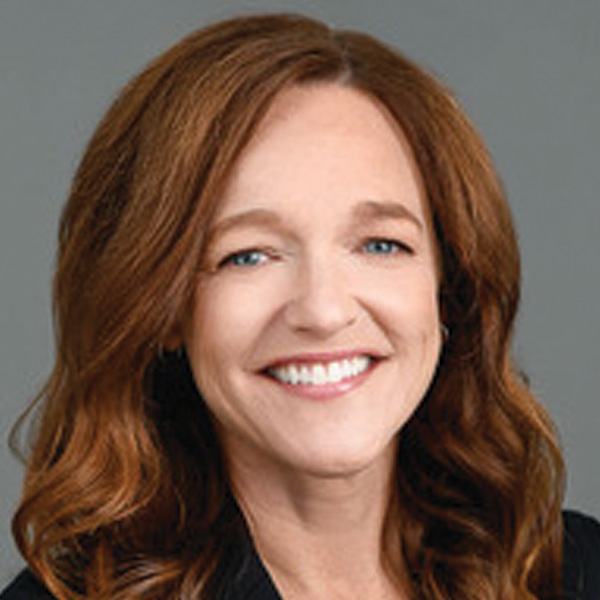
In this episode of Admissions Straight Talk, Accepted consultant and podcast host Dr. Valerie Wherley speaks with Dr. Rona Woldenberg, associate dean for admissions and interim associate dean of student affairs at the Zucker School of Medicine. Together, they explore how the school’s partnership with Northwell Health provides students with exceptional clinical exposure and how its innovative curriculum prepares future physicians for the evolving healthcare landscape.
If you’re researching medical schools or preparing your application, this conversation provides valuable insight into how Zucker trains its students and what it looks for in the physicians of tomorrow.
Table of Contents:
- The Founding of the Zucker School of Medicine
- Zucker School of Medicine Admissions Stats and Growing Applicant Interest
- Research Reputation and National Rankings
- Building an Inclusive Medical School Environment and Cultural Humility in the Curriculum
- EMT Training During the First Nine Weeks and Mass Casualty Incident Day Simulation
- Student Feedback on the EMT Experience
- What the Zucker School of Medicine Looks for in Applicants

The Founding of the Zucker School of Medicine
I’d like to begin by providing our listeners with a bit of background. In 2008, Hofstra University and what is now known as Northwell Health announced plans to establish a new medical school, which is now the Zucker School of Medicine. Talk a bit about why it was so advantageous for a university to combine with a health system to create a partnership and a medical educational model.
Well, in the past, what happened was medical schools were embedded in universities, and then there were agreements with various hospitals where the hospitals would provide rotations – the basically more advanced level of education, what we call the clinical – in the third and fourth years.
And what was happening and what we saw, and it actually was true when I was in medical school, because hospitals that were affiliated with the medical school that I went to subsequent to my graduation ended up actually changing affiliations to different medical schools. So, what happened is oftentimes hospitals would change affiliations, and in one sign of a pen, these schools would lose a third of their clinical rotation facilities.
Now, because our school is co-owned between the health system Northwell and the university Hofstra, the health system partially owns the school. So, our hospitals don’t jump ship, so to speak. They are specifically dedicated to the education of our students. And so what this agreement allowed for is a consistent clinical education that could be provided to our students.
And what’s great about with the agreement with Northwell – and you may have heard, it’s been in the news, Northwell recently signed an agreement with Nuvance, which is up in Connecticut, which has, I think, an additional five clinical sites in their health systems. Those all become potentially incorporated into our clinical education facilities. So, that co-ownership translates into a very sustainable, consistent, and reliable model for clinical education for our students.
Which is great. And all fairly centrally located now with the new Connecticut sites. You know, maybe a little bit of travel, but everything seems like it’s just right there.
Absolutely, and we don’t use all of the hospitals. I mean, Northwell, I think now with Nuvance is 28 hospitals, something vast, and not to mention outpatient sites and emergency sites. So, not all sites are used for the core education, but the fact that these sites are added on, elective time, students who are considering maybe going to some of these sites for residency, an opportunity to go and do some elective work in some of these sites, again, just broadens the educational environment for our students – especially on the clinical end, which again is obviously critical when you’re making a decision about your next step.
Zucker School of Medicine Admissions Stats and Growing Applicant Interest
Sure. Which leads me to my next question. Let’s highlight some recent matriculation data. Last year in the 2025 cycle, which would be your current MS1 class, you had close to 5,500 applications. And this year in the 2026 cycle, you have over 6,200 applicants. Of those who matriculated, they had an impressive median MCAT score of 518 and a median GPA of 3.9. Why do you think the Zucker School of Medicine is garnering so much interest from such talented medical school applicants?
Well, I think there are a bunch of factors that contribute to this. First is the educational model and the pedagogy of the school. There have been sort of phrases that we use: learning in action, clinical medicine from day one. I know we may get into this a little bit later in the podcast. We start with EMT training as the first course in the medical school. There were a lot of things that contributed to the educational pedagogy that really made us very innovative in terms of our educational style. So, I think that’s very attractive to students because we’re sort of trying to create an educational model that keeps up A) with changes in medical practice; B) with technology; and C) that’s practical.
I think there was a rigid structure to medical education that existed certainly when I went through, in a lot of schools still, although more and more are sort of transforming. And we sort of led the way for that transformation of a sort of more adult educational model – the reverse classroom, right? Facts at home, coming to school together to solve problems. Because you go to business schools, law schools, they’re adult learning environments. Whereas the medical school traditional education was very much that old model transfer of facts, PowerPoint, one-way direction – more about the teacher than the learner. And we sort of flipped that around and really made it more about the learner.
So, why are we as good as we are? We’re a learner-centered environment, right? We’re an adult learning environment. It’s learning in action. But it’s also Northwell, and there is a tremendous amount of energy that comes from the Northwell Health System to the school. During COVID, we were at the forefront. I think a lot of news came out in terms we had the largest number of COVID patients in our health system in New York and in our area, which meant in the, you know, largely the first vaccine given to a Northwell nurse. That was the first vaccine administered in the United States. So, a lot tied into the reputation of Northwell, the growth of Northwell, the success of Northwell in the healthcare environment. So, there are a lot of factors, I think.
And one other thing that we’re gonna get to a little bit is the U.S. News & World Report rankings also we’re a top tier of, top four. Sorry, there are four tiers. We are a tier one school in a relatively short period of time, and I think all the things that I just mentioned to you – the pedagogy, our students, you talk about the quality of our students, Northwell, the research environment there as well – have all contributed to a rapid escalation of our reputation, which has put us in that top tier.
Research Reputation and National Rankings
Absolutely. And I know in the work that I do with premed students, I have seen a huge interest in students wanting to apply and matriculate and attend Hofstra for all of those reasons that you’re talking about. To your point about being a top-tier institution, I went to your school’s website, and on the home screen and in very large font reads the following quote: “among the best in the nation for medical research” – end quote. Can you talk more about this distinction and what it means for your medical students?
Well, when the U.S. News that… That comes from the U.S. News & World Report, which is still very much front and center, I think, in rankings of colleges and universities as well as med schools. You know, that’s their business, and that’s what drives their business. Some schools have dropped off of it. That’s a conscious choice of the school.
For us, building a reputation, it was important for us to stay there because that contributes to reputation building, for sure, and in many ways, I think reputation maintenance. Because if you look at the 16 schools in the country of the 160 accredited medical schools, there are some good partners up there with us: Yale, Pittsburgh, Vanderbilt, Emory, Case Western. So, we’re in some good company up there, and obviously they’re maintaining their reputation, and we’re sort of now in the maintenance space. I think we’ve built ours.
But what it basically means is that we’re one step ahead in the realm of research in funding, in cutting-edge technology, and in actual research being done by the faculty and the students. U.S. News breaks down to research institutions and community-based institutions. And fortunately for us, I do think we have a good community-based presentation and presence as well. And you can look at our match list and see some of our students do choose to go into more community-focused and -centered institutions. I think that also speaks to the strength of our school. We do not direct students one direction versus another. The fact that we have community-centered care as well as heavy-duty research care, transplant, burn, et cetera, allows us to really open up any possibility to a student no matter their interests. But the ranking that we occupy currently is that a top-tier research facility because of the things that I mentioned.
Building an Inclusive Medical School Environment and Cultural Humility in the Curriculum
Amazing. To talk about community-based programs and maybe a little bit more mission-based work, I’d like to highlight your Office of Engagement and Excellence. I’m hoping you could share the mission of that office and how they are putting their mission into action through both the curriculum and some featured programs.
Sure, so you know the mission of that office is really to drive a welcoming and inclusive community for all of our learners. We try to achieve excellence through a sense of belonging. What that translates into in terms of actual practice. First, we have many different clubs, organizations – so, LMSA, the Latino Medical Student Organization, SNMA, OutMed, which is our LGBTQ group. So, there are many different communities, but the beauty of those communities is one of our former chairs of the LMSA was an Asian woman who spoke Spanish. So, you don’t have to have the identity of that community to be a part of that community. And that sort of speaks to the philosophy. It’s really an inclusive, welcoming environment for all of our students. We have diversity nights. We have mentorship programs that all run through the office that, again, allow for students to feel a sense of inclusion, a sense of belonging and thus translate into a better performance.
In terms of our curriculum, starting in the first year, we have a cultural humility curriculum that begins again MS1 year and runs all the way through their time in the medical school. And basically, the philosophy or the mission is that through cultural humility, you can impact patient care. And a better understanding of a culture and a society where a patient comes from will allow you to better impact and get cooperation in the long run from your patients. In the first 100 weeks, what we call it, because our curriculum is a little bit different, so we try to name it a little different, differently than the first two years, second two years, because the clinical medicine is so much involved in our training, they get scenarios of different circumstances. An orthodox Jewish person who may not take a pill because there’s gelatin in the pill, and the gelatin is something that can impact whether something is kosher or not. You have a turban wearing Sikh and how that may impact the care, how that relates into the biases.
So, there are scenario after scenario where students encounter differences in practice, in cultures, and how they potentially can understand a background of a patient and bring that forward. So, that goes through the curriculum, all through their stay here in the school in connection with a lot of the co-curricular activities that I mentioned. And through that, that’s where we essentially develop an Office of Engagement and Excellence, and that’s what that office really is directed at doing.
I mean, I think that that’s fantastic. And correct me if I’m wrong, but there are plenty of studies that show when patients see a practitioner who looks like them or work with a practitioner who really hears them, they’re more likely to show up for follow-up appointments or follow up with their treatment plan. And so that’s part of what you’re doing with some of these programs. Is that true?
Absolutely. And it also mitigates any legal action, which is there’s been some studies that support that as well. And I know doctors are certainly sensitive to that. And a relationship with a patient, which is what you’re speaking of, is key toward that in the long run as well.
EMT Training During the First Nine Weeks and Mass Casualty Incident Day Simulation
Yeah, that’s great. I’d like to go back to something you talked about a little bit earlier, and that is student-based learning and hands-on learning. And I was a faculty member for 20 years at an undergraduate institution, and I saw this shift in pedagogy, where when I first started teaching didactic learning. You know, me teaching behind a podium was sort of the standard. And then I saw my students needing to do hands-on work more and more and me doing less didactic teaching in order for them to be successful.
So, to that end, I’d like to ask you this question. I’d like to quote this sentence from a news article. Quote: “the Zucker School of Medicine is the first school in the country to incorporate EMT training into its rigorous curriculum” – end quote.
Thank you.
Can you describe this hands-on training program and then something called “Mass Casualty Incident Day”?
No problem. So, you talked a little bit earlier and we spoke about the relationship between the school and the health system. The Northwell Health System runs ambulance services through Nassau and Suffolk County as well as in New York City surrounding Lenox Hill Hospital. As a result of that and because again of the co-ownership, we were able to develop a program that allowed our first-year students in their first nine weeks of medical school to get incorporated and become licensed EMTs in the state of New York using the Northwell ambulance training as part of their education. So, the first nine weeks of medical school, our students all are trained in the New York State EMT curriculum. They do 24 hours’ worth of EMT runs in the areas that I mentioned – either Nassau, Suffolk, or New York City, depending on their choices. And in addition to those emergency educational activities and coursework, they do our coursework layered on top. So, it’s not like it’s just EMT. They also get case-based learning, problem-based learning in the smoke inhalation victim, the spinal cord injury patient, the acute myocardial infarction or acute heart attack patient, the acute stroke patient. So, they’re getting that as well as the EMT curriculum.
And we actually make our white coat ceremony after the EMT curriculum and after they pass their EMT exam, because as I mentioned to you, it’s learning in action. It’s active learning. We want them to actually earn that white coat. A lot of schools give the white coat within the first few days or first few weeks of starting medical school as sort of a congratulatory gift of getting into medical school. We look at it, we want you to earn it, right? So, they actually, we schedule our white coat post the EMT course, post when they pass that course. So, they actually get their white coat. They get an EMT pin along with the Arnold Gold Foundation pin that comes along with it.
In that EMT training, we embed the Mass Casualty Day that you mentioned. What that is is the students go to the Nassau County fire training facility, the fireman training facility. They are exposed to four different stations: one is a subway train crash, one is an active shooter drill, one is a Jaws of Life, and one is actually a bus bombing. And what happens is the students are broken up into two different groups. So, half the students are victims, and half the students are responders. And obviously, it flips around, and so students get experiences on both sides and they work with instructors on both the Northwell EMS side as well as the Nassau County Fire Division side and are able to get exposure.
I feel like we sort of put our students through The Pitt. I know The Pitt is very popular. I’ve watched it. It’s actually something new for me because I sort of shied away from watching medical shows because my life is medicine, so when you want to relax, you sort of try to back off of that. But I did watch The Pitt because I have a daughter and son-in-law who are docs, and they said, “Mom, you have to watch The Pitt.” So, I said, “Okay, I will watch it.” It very much engages you, and I sort of feel like the medicine is pretty good in there. But if you had to equate it, you would sort of say we’re putting our students in The Pitt for the day in terms of their exposure to some of the potential larger kind of mass casualty space as part of the EMT training.
Student Feedback on the EMT Experience
Do you get feedback on this from the students? What are they saying about this hands-on training in the first nine weeks of their medical curriculum?
I think, you know, uniformly, they really get a tremendous amount out of it. I think, you know, it seems like it has a wow factor, but what is sort of going on in the background, which is probably the more important piece of it, because a small percentage of our students go into emergency medicine. It’s not the dominant group, for sure. Some do, but… Is that they learn, A) the importance of getting to the relevant facts quickly, right? So, you’re walking into an emergency circumstance, into a patient’s home. You’re sort of surveying the territory, getting an idea of what’s going on, asking pertinent questions through patients’ family members, trying to get information and relevant information quickly, right? Because that’s what EMT is all about. And trying to drive the care forward. You know, stroke patient, last known well. When was the patient well the last time? What the symptoms are? What preceded the event? Then you have to make decisions in the face of ambiguity, and that’s what medicine is about as well. So, the EMT all seems to have lot of flashing lights, and it all looks very good, but really, we’re giving them skills that they’re gonna use throughout their medical training.
And also, you get to see people when they’re the most vulnerable. They learn how to act in a situation where patients and families are very vulnerable from day one when they walk into medical school. I think in many schools, students really don’t get that experience till their third year. And here, we’re giving it day one. We are putting you in an environment where you have to know what you’re doing. You have to respond. You have to keep calm. You have to use all of your faculties to sort of assess a situation and get information and make a decision and drive care forward. And we give that to them walking in the door. And after that, then we’ll build the knowledge. So, we give them a framework upon which to hang the knowledge, and then they start to accumulate and develop their knowledge base, which they’ll continue to do for the rest of their careers. But we give them that foundation, those sort of foundational columns where to hang all of this stuff from the day they walk in.
What the Zucker School of Medicine Looks for in Applicants
Right. Well, I just think that that is a fantastic model. So, we’re coming up to the end. And between the research that you’ve highlighted and the hands-on learning and the affiliation with Northwell Health, I’m sure that many of our listeners will now be interested in the Hofstra School of Medicine. So, to finish the podcast, I ask the same final question to all deans and program directors: what are you looking for in a competitive applicant to your program?
I think we’re looking for students who embrace a growth mindset. I know there’s a lot of buzz around those words and those who are lifelong learners. We give you the skills to be the lifelong learner, but we want students who want to participate in their learning environment, who are curious, who are going to do a deep dive and put themselves in situations they may feel uncomfortable – not studying to a test, but actually understanding that they’re learning and what they’re engaging in is going to allow them to become successful professionals. So, it’s really those who understand you cannot dominate this material. Medicine, it’s just so vast that there’s no way that you’re going to know everything. There’s no way we’re going to just study for the test. That’s not going to make you a successful physician. We’re trying to train students who are, again, very invested in their profession and who will go out there and sort of be a leader in an environment where the changes are so rapid. We haven’t even brought up those initials, AI, right? And then what that’s gonna mean for everything that we do? And we want students who can embrace that, who won’t shy away from that, but who will actually be that person who is open to change, who will embrace change.
And as I said, we give the students the skills to be lifelong learners, and that’s what we’re looking for – obviously, collaborative learners. We learn in small groups. You have to be able to work in a group and learn from your colleagues, not compete with your colleagues, not be a siloed learner. Medicine is a team game. I’m a much better doctor when I interact with – I’m a neuroradiologist – when I interact with the neurologist and the neurosurgeons and the PM&R people, the physical medicine and rehab. So, you gotta be a team player in this game. So, we look for also those people who will learn well and who will… Not everybody has come… Premed education, unfortunately, is not that, necessarily. It’s much more of a competitive environment, much more of a siloed type of learning process. But what we’re looking for is people who can basically embrace that of team, group, growth mindset and ultimately lifelong learner.
Well, thank you. I think that that will give some of our premed students and potential applicants insight into how to display some of their skills and abilities on their application. And I’d like to thank you for your time today. This was very informative.
Well, thank you, Valerie. Thank you for inviting me. I am very much someone who likes to encourage the practice of medicine and people to enter medicine. It’s a journey that never ends. It’s a career that I’ve devoted my life to, and it’s a privilege to inspire others to do the same. So, thank you for this opportunity.
Related Resources
- Zucker School of Medicine at Hofstra/Northwell
- Dr. Rona Woldenberg bio
- Medical School Secondary Essay Tips
- A Strategic Guide for Applying to Medical School
Related Episodes