Becoming a PA at Sacred Heart: International Opportunities, Orthopedic Training, and Admissions Advice [Episode 613]

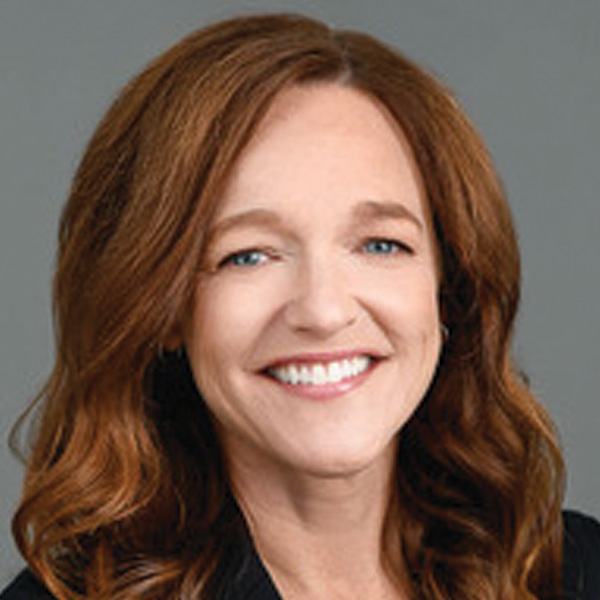
In this episode of Admissions Straight Talk, host Dr. Valerie Wherley sits down with Dr. Reynold Jaglal, program director of the Sacred Heart University Master of Science in Physician Assistant Studies (MSPAS) program, for an in-depth look at Sacred Heart’s values-focused approach to physician assistant (PA) education. Dr. Jaglal breaks down the program’s 27-month curriculum, including its team-taught didactic model, hands-on clinical rotations, and distinctive international clinical opportunities in Ireland and Spain.
He also shares what makes Sacred Heart’s primary care–focused training unique, such as its required orthopedics rotation, and provides clear, practical advice for PA school applicants on demonstrating their fit with the school’s mission, communicating their personal values, and explaining their academic challenges. Whether you’re preparing to apply, exploring clinical programs, or curious about global PA education, this episode offers a thoughtful, insider perspective.
Table of Contents

Episode Transcript
Welcome to the podcast.
Thank you for having me.
Okay, let’s jump right into it. Many of our listeners may not have heard of Sacred Heart University. So let’s start with some foundational information. When was the PA program started? Where is it located? And how many students are in each cohort?
Sure, great question. So, Sacred Heart University is a small liberal arts college located in Fairfield, Connecticut. And the PA program uniquely is located in Stanford, Connecticut. That’s where we started our program really on purpose. We’re one of the few PA programs in the state of Connecticut affiliated with a teaching hospital, Stanford Hospital, and the town of Stanford, and that’s why we’re down here.
We started about ten years ago in 2014 and we had joined our first cohort in 2016, and then our first graduate was 2018. It’s a 27-month program. Students graduate with a master’s degree in physician assistant studies and we gradually increased our class size. When we started the program back in 2016, we had 26 students, and we increased to 33 and our current number is 42.
However, with the demand in people who want to become PAs and the community needs and the healthcare needs, we’re going to increase our class size in the next year or so, hopefully, to maybe around 60. Yeah, so it is exciting.
That’s exciting news. That’s great. It’s great news for anybody potentially interested in your program.
Let’s talk a little bit about your curriculum. This is a 27-month-long program. The first phase is a 12-month didactic phase. So let’s talk about that piece right there. What is the approach during these 12 months, and who do you have teaching this didactic phase?
Sure. So the program’s appeal for a lot of young people is the short duration of the curriculum, 27 months. However, when you look at medical school education, which is about 36 months, and you know, with a year maybe doing preclinical work, we try to copy that model. It’s a medical school model. That’s what PA school is, but condense it to a much more clinical application. So we have the typical courses, anatomy, physiology, pathophysiology, and then all the medicine courses.
We have dedicated courses in pharmacology, diagnostic medicine, which is reading x-rays, and then the population of medicine, evidence-based medicine for peer students who do scholarly work, and then professional courses. The 12 months is divided into three trimesters currently, and it’s a modular system. For example, our program builds on medical topics. We start off our curriculum in the field of dermatology.
You know, not that it’s the easiest field, but it’s probably the most, the least complex. So students learn anatomy of a dermatologist, conditions of skin, they learn the physiology, they learn the disease processes, and in pharmacology, the medications, the diagnostic testing. So if you look at every module, it’s a 360 degree to one subject area, and then that may last two to three weeks, and then we move on to another module.
The next one for us is ophthalmology. And then there’s some little overlap there. Well, students learn about the eye diseases and disorders. It’s primarily taught by our principal faculty members. We have seven altogether in our program. However, we do rely on our physician colleagues and PAs that practice in clinical fields. For example, we bring in a PA that’s been practicing dermatology, I think for like 15 years now. She will come in and teach the majority of the medicine, the disease states.
And then our principal faculties will augment that. We have a dedicated pharmacologist on our team, so he will teach the pharmacy. We teach the approach to physical diagnosis, you know, how to examine the skin and, you know, identify lesions, et cetera, by our principal faculty members. So it’s really his team teaching. Not one faculty member teaches an entire course. It’s a combination of all of us contributing, you know, whatever we can.
The beauty of PA education is we all taught the same primary care medicine, so we all have the ability to go back and teach a different subject, obviously, with relearning some of the material. So that’s the beauty of that. We can team teach together. I think it works pretty well.
Sure. And I would also think that there’s such value in having clinicians in the classroom because they’re not just teaching textbook content, right? So they’re teaching foundational content, but they’re also teaching application. They’re bringing in real-world stories. They’re bringing in some case studies and that’s where some real value in having clinicians in the classroom comes in.
100%.
It’s invaluable what they can bring in from to the classroom, their real-world experience. It’s invaluable. It really does. Because that’s the beauty of PA education. Because it’s condensed, we have to provide a lot of information up front and make it clinically relevant. We don’t spend the depth of like they do in medical school going over every, you know, modules for weeks at a time. We have to do it, I hate to say, quickly, but thoroughly. And we have to make it interesting. So the clinical relevance really helps.
Now, you talk about having a really condensed curriculum and having to get through this material quickly. So, some students think when they get to their graduate school, PA education, maybe they would just be stuck in the classroom the entire time. However, when I was preparing for this interview, I noticed that you offer several international training opportunities for your students, including Ireland and Spain.
Can you talk a little bit more about that and why are these opportunities of value to PA training?
Sure, absolutely. I’ll be honest, though, however, our didactic year is primarily in the classroom. So that is traditional lecture, workshop, labs, you know, traditional experience, because it’s nicer to have the in-person opportunity to ask questions and interactions. So students, unfortunately, do spend, or fortunately spend, a majority of their first year in the classroom.
We have opportunities to go into the clinics in their third or fourth trimesters where they get introduced to hospitals and doctor’s offices where they spend a couple days a week in the clinics preparing them for their clinical year. So their clinical year is entirely outside of the classroom. That’s real-world experience. Hospitals, doctor’s offices, surgical care centers. And they’ll do 40 to 70 to 80 hours in that field. For example, surgery, they might be there for 80 hours a week, take a call, etc. So that’s where they really do the hands-on. For international, it’s a real appeal because, you know, PAs are grown internationally as well. The PA field in particular has grown in Canada, Europe, Australia.
And in Ireland, Ireland has a PA program, one of the first in the U.K. They have a, I think it’s a Royal College of Surgeons has a PA program. So it’s really growing. And as you may know, Sacred Heart University has a campus in Ireland in Dingle, and they have a lot of undergraduate programs. They have nursing that goes over to the clinicals. And recently in the last two years, our PA students have had the opportunity to work with their family medicine physicians.
Our program is a primary care program. It really works well. You know, it’s good interaction to see healthcare in a different country. Although it’s the same, medicine is the same universally. The application, the way we interact with patients, and the differences are really interesting to learn. It’s not considered a core rotation for us. So students have a lot more opportunity to see other things that they would in the United States. So that’s the appeal. Nowhere else really, when you think about graduate education, you get an opportunity to go abroad.
Right, we think about undergrad, you can spend a semester. This is a concentrated experience. They do it for four to five weeks in Dingle, for example. And then we’re also going recently to Seville, Spain. We’re going there now for the second year and it’s an amazing experience. We’re involved with local hospitals there and they get to work with the local physicians and not only see primary care. They get to go in the emergency department. They get to go in surgery and women’s health and pediatrics. So it’s just another opportunity to explore different cultures.
And I think that’s what makes our program really unique, the opportunity to have cultural training and experiences.
Let’s talk a little bit more about that clinical phase. So we’ve talked about the didactic phase and the international opportunities that are in this clinical phase. So your second phase is a 15-month clinical phase comprising of ten five-week rotations. I think I have that correct, but correct me if I’m wrong.
No, that is correct.
And some of the clinical, I’d like to hear more about some of your clinical specialty areas. I heard you talk about primary care. What else can students who attend your PA program expect to see or be exposed to during that clinical phase?
Well, you know, we try to, the accreditation bodies for PAs try to unify or, excuse me, consolidate PE education so it’s unified across all schools. So we have six core rotations that all programs have to provide. Those include internal medicine, where you’re in the hospital, women’s health, including primary care, GYN, pediatrics, surgery, emergency medicine.
And the PA program started in family medicine. So family medicine is another core rotation, as well as mental health or behavioral health. So those are our core rotations. Every program has to have those. What makes our program unique is we have a built in, we call it a core rotation of orthopedics. A lot of PA programs, orthopedics is a elective, if you will. For us, it’s a required rotation. We recognize musculoskeletal disorders really in every field of medicine. You hurt your back or you get an injury or you have to have surgery, you know, a knee replacement. It’s really integral to education. So we make that a core rotation.
And what distinguishes us as a primary care program is we have an additional rotation in primary care. Some programs don’t have a unique dedicated primary care. They have the required family medicine. We have an additional one primary care. You know, you go out to see your primary care provider and they’re in your doctor’s office, if you will. That’s what that rotation is. We work in a lot of urgent care centers, as well as primary care offices.
And then we offer one elective. You know, that can be an area of choice for students. Some people are interested in like intensive care medicine. They work in the ICU units. Or they might be interested in working in cardiovascular medicine, cardiology, or surgical subspecialties like neurosurgery or cardiothoracic. So it’s what the students choose to, you know, they find interesting and they have one rotation in that.
It’s such a nice opportunity and very varied in the background and skills you obtain over that 15 months.
I have to imagine that the orthopedic rotation is very popular. With the PA clients that I have worked with, and I’ve been doing pre-health work for quite a while, a lot of PA clients that I’ve worked with have thought that they were interested in orthopedics or dermatology.
That you’ve talked about in terms of dermatology being one of the first didactic phases requiring an orthopedic rotation really will help those students figure out is this particular specialty area right for them or not.
Okay, let’s change gears for a second. You have a fairly new dual-degree program, and it is called the Bachelor’s–Master of Science in Physician Assistant Studies dual degree. It does have an acronym, MSPAS. Can you elaborate on what type of student should apply for this program and tell us a little bit more about it?
Yeah, you know, as the PA profession has grown in the last 50-plus years in the United States, we’re seeing younger people, you know, recognizing that they may want to enter this field. A lot of people know what a doctor is or maybe a nurse is, but people are more and more learning what PAs do in our role in healthcare. So this program is designed for the high school student. You know, those interested in doing a pre-health career who know they definitely want to become a PA versus, let’s say, a physician, and want a guaranteed pathway for that. So these are students who are very well-rounded, have high GPAs, have a good science GPA, may have taken some AP courses, who know they want to go into professional school and apply to our PA program. And if they get accepted, get a guaranteed pathway to the graduate program. That would bypass the normal application process. You know, these are the top probably five to 10% of their graduating class in high school. And once they meet our requirements, the minimum GPA requirements, et cetera, they get accepted in this program. It’s a guaranteed seat in the graduate program. So they don’t have to worry, you know, come to apply to the graduate program.
However, it’s a difficult journey to get to the graduate program. We have strict criterion. We call it progression criterion during your four years, and it’s maintaining a 3.3 GPA every trimester for your four years. And we have a scripted, if you will, curriculum. It’s very similar to our premed curriculum. Students are often pre-biology majors, who follow that curriculum, or health science, or exercise science, but it’s prescribed, you know, heavy into biology, chemistry, curriculum, doing well in those courses and maintaining a 3.3. And if they do so, they will get automatically into our program.
That’s huge and you know for parents and young people like to get that reassurance, that’s huge.
Absolutely. I anticipate students will find that very appealing. As we know, it is very competitive to get into PA schools after graduating. And sometimes it takes students one gap year or two gap years of clinical work. And so to have that guarantee as an undergraduate student would be a huge sense of relief.
That’s right.
Okay. Next question. I’ve been working with pre-health students for many years and during that time, it has been well over ten, I’ve personally seen a significant increase in the interest of the PA degree. And I was wondering, have you also seen this in the work that you’ve been doing as evidenced by the increase in your number of applications? If so, why do you think this is a trend?
Well, we all know that healthcare is a needed necessity in the United States. There’s been a decrease in primary care providers in the last ten years. And I think if you look at the government websites and Bureau of Labor Statistics, we’re going to continue to see a shortage of primary care providers, especially as the U.S. population continues to age. So the need to have these primary care providers and to add to the physician shortages that are projected, PAs in a ripe and a great position.
It’s got a lot of appeal. You’re going to practice medicine collaboratively with your physician partners. A lot of it is independent, although we’re not 100% independent. And we’ll be practicing high-level medicine. We’re making independent decisions. The training is remarkable. We not only learn medicine, but we also learn surgical skills, you know, how to perform sutures or minor surgical procedures or first assist in operations.
So many physician colleagues recognize that they’re not going to have enough hands, if you will, to help them in their practices. So the job market is really high and the demand is there. The salaries are continuing to rise, you know. But what happens is what we’re seeing is we’re getting a higher caliber of students every year. So it does breed a little bit of competition for these already high-achieving students. So it becomes challenging, you know. Similar to medical school, we’re seeing high GPAs and a level of competition because the students are so qualified, you know, and their background in education.
Yeah, absolutely. Well, this brings me to my next question. That was a great segue. I’m going to ask all program directors the same or a very similar question, which will be helpful to our viewers. What are you looking for in a competitive application to your program?
Yeah, that’s a great question because we actually asked that. We have a dedicated virtual admissions interview, similar to like this, to remove some of the barriers from travel. If you live in California and apply in Connecticut, you don’t have to pay for that travel. So we enjoy this virtual format. And we always ask because we know the students are applying are already well qualified on paper. They have high GPAs, good test scores, excellent letter recommendations. They actually wrote beautiful essays. But the reality is we want people who share our commitment to our mission. Sacred Heart University in particular is a mission-driven institution. We’re looking for people to share our similar values. That’s compassion for your fellow man, service, you know, populations, service to underprivileged or underserved areas, and a commitment to primary care. So during the interview, we look for those traits and qualities.
Tell me why you want to become a PA. Know exactly what the role and responsibility is because people kind of can read about it in an article. But I want you to really know, shadow a PA, know exactly what they do, and demonstrate to us that you have a commitment to our mission. That’s what we’re looking for, to be honest with you, and to be able to articulate that. I think that’s key because again, on paper, when you get an interview for our program, you’ve already made it. You know, you’re qualified academically. So we look at those personal qualities.
I’m so glad you said that. When I am working with clients and I’m helping them prepare for an interview, doing a mock interview, my guidance to them is if you’ve been asked for an interview, it means that you are academically qualified. You’ve already jumped that hurdle. So the interview portion is to talk about fit. How do you fit at that school? How do you fit culturally?
Yes.
How do you fit within the tenor of the community and how do you fit with the mission of the school? And so your final point here is well taken and I think a really good one for applicants to remember.
Right.
The other thing I want to tell applicants, you know, just because you have a lower GPA than your colleagues, explain that to us. Let us know why. Sometimes it’s a very valid reason. You may have had a death in the family during your freshman year. That’s why you’ve got a C in chemistry. Those things are helpful to know in the background, you know, to help us understand. Then if you can show a progressive increase in your GPA over the years, we recognize that as well.
That upward trajectory is very important because it can demonstrate growth and resilience and determination. And I also think it’s helpful to talk about it. Don’t try to hide it, but certainly, you know, sort of be very up front about why it happened and then how you grew from that moment.
Yes. Exactly. Yeah, that’s important to us.
That’s great to know. Well, thank you so much for your time. I really appreciate it. And we will be linking your information and your program’s information in our show notes.
Thank you.
Related Resources:
- Dr. Reynold Jaglal contact information
- Sacred Heart University Master of Science in Physician Assistant Studies
- Sacred Heart University Bachelor’s–MS in Physician Assistant Studies
- The Ultimate Guide to Becoming a Physician Assistant, a free Accepted guide
Related Admissions Straight Talk Episodes
- How to Get Accepted to Duke’s Physician Assistant Program [Episode 591]
- How to Get into Physician Assistant Programs [Episode 515]
- Inside the Emory PA Program: Admissions, Curriculum, and Keys to Success [Episode 603]
Subscribe Links
- Apple Podcasts
- Spotify
- Wherever you get your favorite podcasts