Johns Hopkins Post-Baccalaureate Premedical Program: How Career Changers Prepare for Medical School [Episode 634]
A career changer who decides to pursue medicine faces a practical question: how can they complete the science prerequisites, prepare for the MCAT, gain clinical experience, and understand how medical school admissions decisions are made, all without a science background to build on?
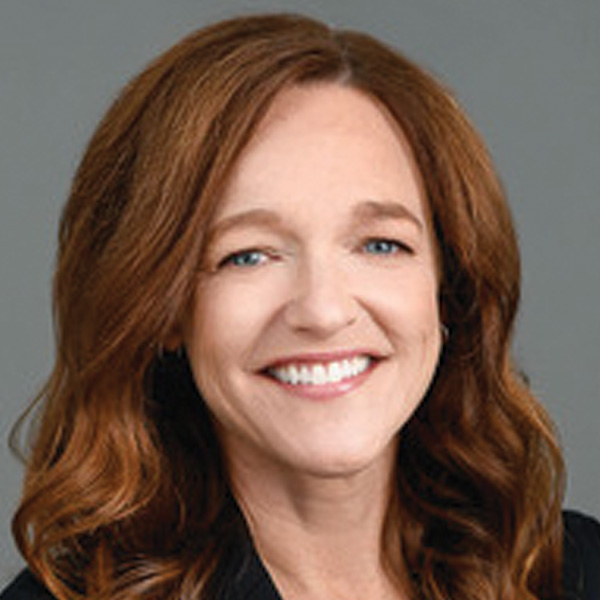
In this episode of Admissions Straight Talk, Accepted admissions expert Dr. Valerie Wherley speaks with Dr. Alexandra Tan, director of the Johns Hopkins Post-Baccalaureate Premedical Program. Dr. Tan, who has directed the program for 13 years, describes a small and collaborative program: just over 30 students, two full-time advisors, and a one-year curriculum taken alongside Johns Hopkins undergraduates. Dr. Tan estimates the program receives roughly 200 applications for just over 30 seats, but she cautions against reading that as pure odds.
Table of Contents
- Who Counts as a Career Changer?
- How Does the Program Support Students Through a Rigorous One-Year Curriculum?
- What If You Have Little or No Research Experience?
- Why Does the Advising Model Focus on Being Ready Rather than Getting In?
- What Are the Pros and Cons of Linkage?
- How Do You Choose the Right Postbac Program?
- Related Resources
- Related Episodes


Who Counts as a Career Changer?
Career changers include recent graduates who never took the prerequisites for medical school, professionals a decade into a career in finance or another field, and students whose science coursework is roughly a decade old.
Medicine and medical school admissions have shifted, and the pandemic prompted many people, including younger students who had not yet started a first career, to reconsider their priorities after a health experience of their own, a family member’s illness, or a new view of healthcare as a human right. The program has responded with a deeper, more data-driven advising model and more alumni involvement.
How Does the Program Support Students Through a Rigorous One-Year Curriculum?
The program is fast by design: students complete the prerequisite sequence—biology, general chemistry, organic chemistry, biochemistry, and physics—in one year, seated in the same classes as Johns Hopkins undergraduates and taught by the same faculty. Dr. Tan notes the rigor is intentional because medical school is rigorous.
Students can use pilot sessions, the Learning Den, and individual tutoring through the university, plus postbac-only resources: boot camps in chemistry, organic chemistry, and physics before classes begin; postbac-only tutors; and MCAT preparation. Dr. Tan notes that in recent years, 100% of the program’s students have used a campus academic resource.
What If You Have Little or No Research Experience?
Research is not required to apply to the program, and a student can complete the program and enter medical school without it.
For students who are curious about research or want clinical exposure, Medical Tutorial internships, a partnership with the Johns Hopkins School of Medicine, make it straightforward to work with School of Medicine faculty and practitioners in research and clinical settings. Students can create their own tutorial around a specific interest or choose from a list of existing options.
Although January intersession tutorials are predominantly clinical, students can also pursue research during that period. Students aiming for MD/PhD programs will find extensive research opportunities as well.
Why Does the Advising Model Focus on Being Ready Rather than Getting In?
Students arrive with different backgrounds, preparation, and understanding of what becoming a physician takes, so the program does not use a one-size-fits-all approach. Its advising model has two layers. A year-long advising class, meeting almost every week, teaches students how medical schools make decisions and turns that understanding into concrete steps, such as how the personal statement provides context for an application. Individualized advising builds on that foundation, with repeated feedback on student work.
Advising continues after graduation for as long as a student needs before applying. Students tell Dr. Tan they leave advising meetings feeling better, because clarity about what they’re being asked to do replaces the conflicting advice students hear elsewhere. The model also reframes a hard conversation: advisors have no crystal ball, so rather than labeling a student competitive or not competitive, the program talks about risk. A high-risk application to medical school can still succeed, and the decision belongs to the student; the advisor’s job is to make sure the student understands the risk involved.
What Are the Pros and Cons of Linkage?
Linkage has one clear advantage: speed. Dr. Tan is equally clear that it offers no other built-in edge, as a student can apply to a medical school that has a linkage program, such as Cornell, through the regular cycle and still be admitted. Linkage means applying to a single school in the middle of the postbac year, so it only lowers risk for a student who is ready on that timeline. In this context, “ready” does not mean feeling ready; it means medical schools judge the applicant as ready.
The drawbacks deserve equal weight. Building a complete medical school application for one school halfway through a one-year postbac program is a significant investment of time, and rejection carries an emotional toll that students often underestimate. Students who do not link can apply in the next regular cycle, and Dr. Tan notes that some later say they are glad they ended up at a different school. The application cycle returns every year, and no one needs linkage to become a doctor.
How Do You Choose the Right Postbac Program?
Start with fit, which begins with honest self-assessment. A one-year postbac program rewards students who are comfortable with the pace. In contrast, a student who learns by sitting with material over time may thrive in a two-year program instead. Advising intensity matters as well: a high-advising environment is a strength for a student who wants close guidance but can frustrate one who prefers to be left alone. In addition, work schedules, family responsibilities, and other priorities all belong in the decision.
The program’s open-access education videos are designed to help any student work through these questions, whether or not they are considering Johns Hopkins. The videos cover such topics as how to pick a postbac program, metrics and competitiveness, experiences, and linkage.
Related Resources
- Dr. Alexandra Tan bio
- Johns Hopkins Post-Baccalaureate Premedical Program
- Hopkins Open Access Education – What Is a Competitive Applicant?, YouTube video
Related Episodes