
Should You Consider a Caribbean Medical School?
If the application season isn’t going as you’d hoped, your thoughts might turn to alternative routes for your medical education. Perhaps you’re thinking about retaking the MCAT, boosting your GPA with postbaccalaureate coursework, or spending a year in a clinical or research environment.
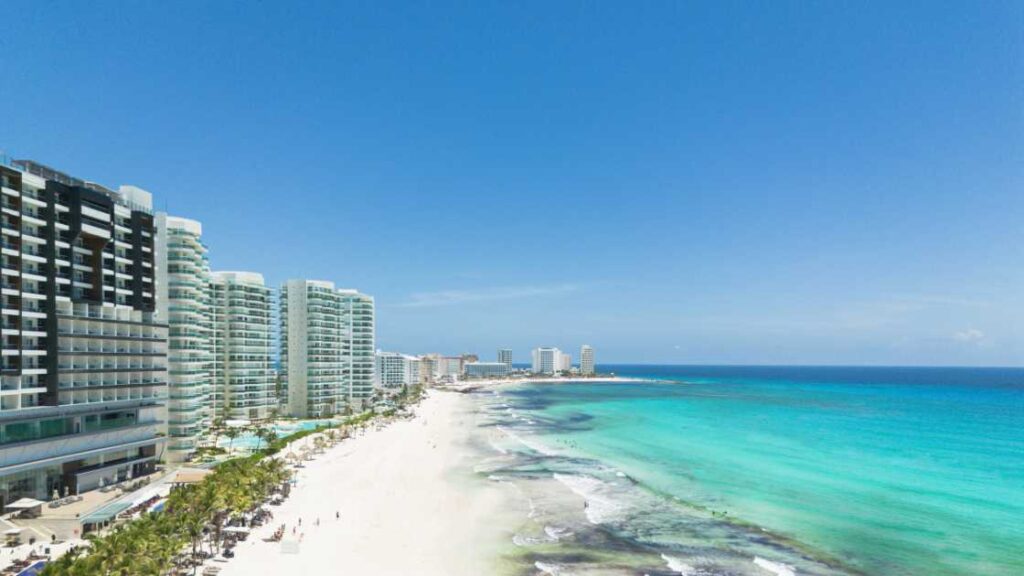
Or you might be thinking about warm, tropical breezes and the island life that awaits you at a Caribbean medical school!

This is not a decision to take lightly. As a U.S. medical student at a Caribbean program, you will face many different challenges – from language barriers to culture shock – that could affect your studies. Classes tend to be large and might feel impersonal, and attrition rates are typically high. You might not have as many choices for clinical rotations, and you might even need to arrange your own elective rotations, especially for some less common specialties.
By far, the biggest concern for U.S. citizen graduates of international medical schools (also known as U.S. international medical graduates, or U.S. IMGs) is matching with a residency program after completing medical school. Some international schools have very poor records of residency placement. Attending the “wrong” medical school could result in you incurring thousands of dollars in debt and struggling to practice medicine once you’re finished.
Despite these issues, an international program can be a feasible option for some aspiring doctors. The required GPA is often lower than the U.S. average, and some programs do not require the MCAT. You will interact with peers, professors, and patients from around the world, who offer a wealth of different perspectives. And while securing a residency can be challenging, it’s certainly not an insurmountable obstacle. In the 2025 Main Residency Match, there were 4,587 U.S. IMGs; of these, 3,108 (67.8%) matched in PGY-1 positions.
Four Questions to Answer
If you’re wondering whether a Caribbean medical school is right for you, ask yourself the following key questions:
1. Can I improve my profile and reapply successfully in the next cycle?
If you’re contemplating applying to Caribbean med schools after failing to gain admission to your target programs, an essential part of your decision-making process is identifying where you might have gone wrong in your applications. Carefully consider whether retaking the MCAT, completing more clinical or research hours, or raising your GPA might make a difference in your future applications.
Also consider timing. If this is your first application cycle, it’s probably not wise to give up on American medical schools just yet. Graduating from a U.S. allopathic (MD) or osteopathic (DO) program will still make you more competitive, with more than 93.5% of MD graduates and 92.6% of DO graduates matching to PGY-1 positions in 2025, compared with 67.8% of U.S. IMGs.
But what if you’ve already applied multiple times to both DO and MD programs? What if you have taken and retaken (and retaken!) the MCAT but haven’t been able to improve your score? If you’re positive you still want to become a doctor at this point, keep reading to determine whether looking outside the United States for medical school is the right decision.
2. Am I interested in a primary care specialty?
The match rate for U.S. IMGs varies by specialty, and applicants in the primary care fields fare the best. Consistently, the top five specialties for U.S. IMGs are internal medicine, family medicine, emergency medicine, pediatrics, and psychiatry.
There are many reasons for this, but probably the most critical one is lack of access to other specialties for rotations and research experiences. Medical students at Caribbean programs can and do arrange rotations in surgical specialties, neurology, anesthesiology, and others, but doing so is not always easy and often requires personal initiative (more on this later). Research opportunities might be less available as well, which is not ideal for some specialties.
The bottom line is that if you’re resolute about becoming a diagnostic radiologist or plastic surgeon, or entering another highly specialized field, your chances of matching as a graduate of a U.S. medical school – whether allopathic or osteopathic – will probably be higher.
3. Am I resilient and flexible enough to live on a remote island?
Let’s not beat around the bush: a Caribbean medical education isn’t about studying under palm trees while sipping piña coladas. Instead, you’re likely to be working in lab facilities that are older or less well equipped – or that lose power regularly. The study materials you need might not be as widely available as you’d like. Many of your classes will be too large, with less faculty attention than is ideal. Bottom line: studying at a Caribbean medical school can be tough.
Life outside medical school in the Caribbean can be challenging as well. It can be difficult to live without all the little luxuries you’re used to in the States, and those you can get will be more expensive. You’re likely to be evacuated at least once during hurricane season. You’re definitely going to lose power more than once. And you’re going to be an ocean away from your friends and family for at least two solid years, possibly in a country where English is not the primary language. All of this can be very isolating.
This life isn’t for everyone, which is one reason for the high attrition rate at Caribbean medical schools. But some people manage to not just survive but even thrive. They’re the ones who embrace these challenges while keeping their eyes on the prize, making the most of what this environment has to offer.
4. Do I enjoy taking initiative, and can I make opportunities for myself where they don’t exist?
I’ve worked with many successful U.S. IMGs over the years, and what consistently sets them apart is that they make up for any lack in their initial qualifications by working harder than the average medical student. They’re heavily involved in university activities, community healthcare initiatives, international case competitions, and so on. They lift up their classmates by sharing study resources and mentoring newcomers on the island. And they go above and beyond in every single one of their clinical rotations, demonstrating their cultural competence by adapting seamlessly in varied environments and contributing on different teams.
And significantly, they can express the advantages of their non-U.S. medical education in their applications and interviews. They can talk about the deep grounding in diagnoses that comes from working without modern diagnostic equipment while volunteering in their local community clinics, or the resourcefulness that grew out of necessity while supporting local hurricane relief efforts. These are invaluable skills that can set U.S. IMGs apart, making them very appealing to primary care residency programs, especially in rural areas.
Do Your Research
That said, I do have a very important caveat for anyone considering a Caribbean program: if studying medical school in another country appeals to you, you need to do your research. There are roughly 60 Caribbean programs of varying quality. Of these, Ross University, St. George’s University, Saba University, and the American University of the Caribbean have the most consistently high placement rates. Courses are taught by U.S. academic physicians, and the programs have well-established clinical rotations in the United States.
Other programs might work well for you, but be sure to pay attention to their students’ performance on the USMLE Step exams. For Step 1, the first-time pass rate for students at non-U.S./Canadian medical schools was only 73% in 2024, compared with 91% for students at U.S. MD schools and 86% at U.S. DO programs. (Note that this includes all international medical schools and students, not just Caribbean students.) If a medical school does not freely share information on its pass rates and residency match success rate, this is cause for concern.
It can also be more difficult to secure funding at international med schools, so when you’re doing your research, insist on a realistic estimate of the cost of your studies and living expenses. Talk to students as well as admissions personnel to confirm everything you hear.
Finally, as you consider Caribbean medical schools, also look to other countries. I highly recommend Ireland’s Atlantic Bridge program. Although quite competitive, Irish medical schools are flexible with regard to the GPAs and MCAT scores of otherwise qualified U.S. and Canadian students and offer a diverse, world-class medical education (including U.S. and Canadian rotations). With a single application, you can apply to the six Irish medical schools, plus the Royal College of Surgeons in Ireland-Bahrain. Irish medical schools are highly regarded in the States and Canada, and many graduates secure residency spots every year.
The other program I recommend is the UQ-Ochsner MD Program. This is a partnership between the University of Queensland in Australia and Louisiana’s Ochsner Health System. The program offers U.S. students the chance to spend their clinical years in Brisbane and complete clinical rotations in New Orleans. In 2025, it matched 97% of its graduates.
Being a U.S. IMG is not for the faint of heart – but if you’ve tried everything else and still have your sights set on medicine, it is something to consider. Your road might not be as easy as that of other medical students, but it’s likely to be more interesting.
If you would like to discuss whether an international medical school is right for you, schedule a complimentary call with one of our expert consultants today.
Related Resources
