How to Get Selected for a Fulbright and Other Competitive Fellowships [Episode 624]
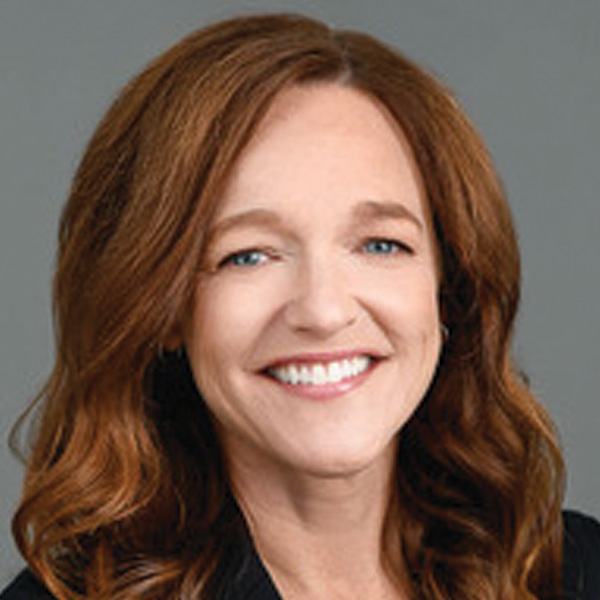
Fellowships such as the Fulbright and Boren can change the entire direction of one’s career – but the application process is competitive, idiosyncratic, and full of small decisions that separate the finalists from the also-rans. In this episode of Admissions Straight Talk, host Dr. Valerie Wherley speaks with Steven Tagle, an Accepted admissions consultant who guides applicants through this exact process and who has lived the journey himself, from receiving a Paul & Daisy Soros–funded MFA to a Fulbright grant that turned into eight years in Greece.
Here are four takeaways from the conversation that any fellowship applicant can put to use right away.
Table of Contents
Start with “fellowship matchmaking,” not with a list of awards.
Many applicants begin by searching “best fellowships” online and trying to reverse-engineer their profile. Steven flips that order. He starts with where the applicant is in their academic or professional life, what they want to study or research, and which fellowships genuinely fit that profile. The right fellowship is rarely the most well-known one; it is the one whose criteria best match the applicant’s story and trajectory.


The Fulbright rewards country-specific preparation.
The Fulbright U.S. Student Program awards roughly 8,000 grants a year across more than 140 countries, but each country has its own requirements, statistics, and mix of Study/Research and English Teaching Assistant awards. Steven’s strongest advice is to read the country pages carefully, study past recipients, and show how you are uniquely qualified to carry out your proposed project in a specific country. Generic applications get filtered out while country-aware ones advance.
The Boren Awards are an underused public-service pipeline.
Most applicants know about Fulbright, but few are familiar with Boren. Boren funds study, research, and language training in regions critical to U.S. national security (the Middle East, Asia, Africa, Latin America) with awards of up to $25,000 for eight weeks to a full year. In exchange, recipients commit to one year of federal government work after graduation. Acceptance rates can hit 40%, and the language and public-service components make it a strong fit for applicants who already want to work in government or national security.
Vulnerability and authenticity make fellowship essays land.
Steven’s closing advice applies to every fellowship: Do not be afraid to be vulnerable on the page. The strongest essays reveal something new to the writer about their own motivations and passions. Applicants who interrogate why they want a fellowship – and how it will bring them closer to their goals – consistently outperform ones who treat their aplication essay as a checkbox.
For a more detailed walk-through of how to position yourself for a Fulbright or Boren application, the country-specific research necessary for a strong Fulbright submission, and the logistics of treating a fellowship application like a graduate program application, listen to the full episode.
Related Resources:
- Steven Tagle bio
- Accepted’s Fellowship Consulting Services
- Fulbright U.S. Student Program (U.S. Department of State)
- Boren Awards (National Security Education Program)
Related Episodes: