
Applying to Medical School with a Criminal Background

Have a criminal record? Don’t try to hide it.
When I was working with the UC Davis School of Medicine conducting admissions for the postbaccalaureate program, I’ll never forget the year we dodged a bullet. We had finished interviewing applicants and were offering acceptances to students. One of the students whom our admissions committee was very excited to accept, based on the strength of his application and interview—he had charmed everyone in the room—declined our offer because he was accepted into another program. While disappointed at first, I received a call a month or so later from that same student trying to find out if he could still join our program because he had been asked to leave the other. Puzzled, I contacted the other program to find out what had happened. It turned out that the student had a criminal record, and he had failed to disclose it. After the other program ran a background check, they discovered that this student had been convicted of a misdemeanor for a crime of a sexual nature. Originally, the student had been convicted of a felony but because he completed some kind of training, probation and/or community service, it was reduced to a misdemeanor.
This situation was tragic for everyone involved, and it did not end well. In all honesty, his application would not have moved forward since the crime was of a sexual nature. Any crimes that involve harm to another person, like sexual assault, fighting, robbery or fraud, can prevent a student from receiving credentials and state licenses. Ultimately, they prevent a person from practicing medicine.
In 2005, the American Association of Medical Colleges (AAMC) Group on Student Affairs began recommending that all medical schools complete a background check on applicants after they are offered acceptances. Students have ten days after receiving these reports to review them and/or provide more information. At that time, only 22 medical schools were conducting criminal background checks. If a student was accepted into medical school who did not disclose a serious crime involving another person, the medical school would not find out until the student’s third year when they failed background checks to do their rotations in hospitals. This new measure made it possible for medical schools to review applicants’ criminal backgrounds before they even started school to prevent similar situations.
As described in the example above, if you have received a conviction, do not try to hide it. There are three different levels of convictions: 1. infractions (eg. speeding ticket), 2. misdemeanors (eg. public intoxication) and 3. felonies (eg. assault). Infractions will not hurt you unless you have an unusual number of the same violation, which would indicate that you do not learn from your mistakes. Misdemeanors may not hold your application back if they do not involve harm to another person. I have seen people with one DUI get accepted into medical school. In ten years, I have not seen a person with a felony get an acceptance.
If you are applying with a misdemeanor:
1. Request copies of the police report to review before you write anything about it.
2. Explain what happened.
3. State the facts. Do not give your opinion.
4. Share only relevant information.
5. Express regret.
6. Demonstrate the personal growth and development that resulted from learning to take responsibility for your actions.
Are you applying to medical school with a criminal record? Work one-on-one with an Accepted advisor to evaluate your profile, figure out where you should apply, and devise an admissions strategy that will help you present your story in the best light to improve your chances of acceptance. View our Med School Admissions Consulting Services for more information.
[xyz-ihs snippet=”Navigating-Med-Maze”]
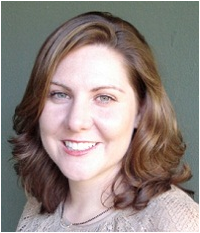 Alicia McNease Nimonkar is an Accepted advisor and editor specializing in healthcare admissions. Prior to joining Accepted, Alicia worked for five years as Student Advisor at UC Davis’ postbac program where she both evaluated applications and advised students applying successfully to med school and related programs.
Related Resources:
• The Quick Guide To Admissions Resumes
• Writing About Overcoming Obstacles in Your Application Essays
• Can You Get Accepted After Doing Something Stupid?
