

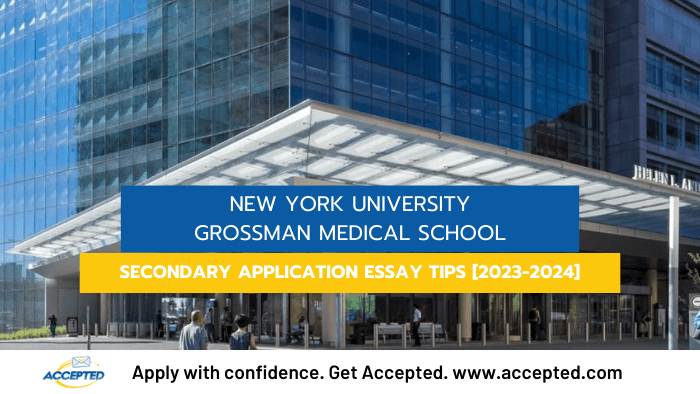
Located in the bustling heart of lower Manhattan, the New York University (NYU) Grossman School of Medicine is known for its strengths in patient care, medical education, and scientific research. The program is consistently ranked highly by physicians and researchers. In the 2023-2024 U.S. News & World Report ranking, it tied at #10 for research…
MEDICAL SCHOOL ADMISSIONS
Starting Your Application Essay: Three Tips

If you haven’t yet read the other blog posts in this series, go ahead and check them out: Once you have reflected on the questions that helped you identify and develop your essay theme, you should have a clear path to writing an effective essay. Here are three essential steps to help you achieve that…
Revise and Polish Your Application Essays

Check out all the blog posts in this series: You’ve completed your first essay draft – this is a great milestone! Outstanding essays are not sprung into the world on the first try, however, so now it’s time to revise and edit. Here’s how to get the job done: 1. Let your essay rest for…
The Resilience Factor: How Flaws and Failures Can Strengthen Your Application

A speaker recently told a story about traveling in Asia, where he saw a stunning emerald. Enchanted by the stone’s beauty, he decided to buy it on the spot. He returned home and took the emerald to a jeweler for appraisal. The jeweler began examining the stone through his magnifier, and as he did so,…
Harvard Medical School Secondary Application Essay Tips and Deadlines [2023-2024]
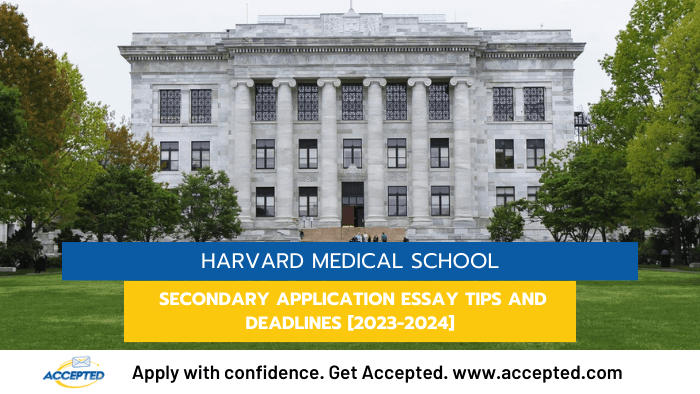
The website of Harvard Medical School (HMS) is a treasure trove of information for applicants. Is HMS right for you? It could be if you are, as the school says, “self-motivated, visionary in …[your] ambition, and compassionate in …[your] approach to the art of healing.” HMS highlights the importance of diversity in its Mission Statement,…
The AAMC’s PREview: Everything You Need to Know

The PREview exam is a type of situational judgment test designed to help admissions committees assess applicants’ pre-professional competencies. Unlike quantitative measures, such as the MCAT and one’s GPA, the PREview exam attempts to evaluate the qualitative, or “soft,” skills believed to be just as important for future physicians. Thus, used in conjunction with other…
Proving Character Traits in Your Essays

When you write an application essay or statement of purpose, you’re trying to accomplish two equally vital goals at once. First, you need to establish your worthiness for acceptance at your target school. However, as part of that task, you need to show the adcom that you have the character traits that their program values….
What You Need to Know to Apply to Medical School [Episode 561]
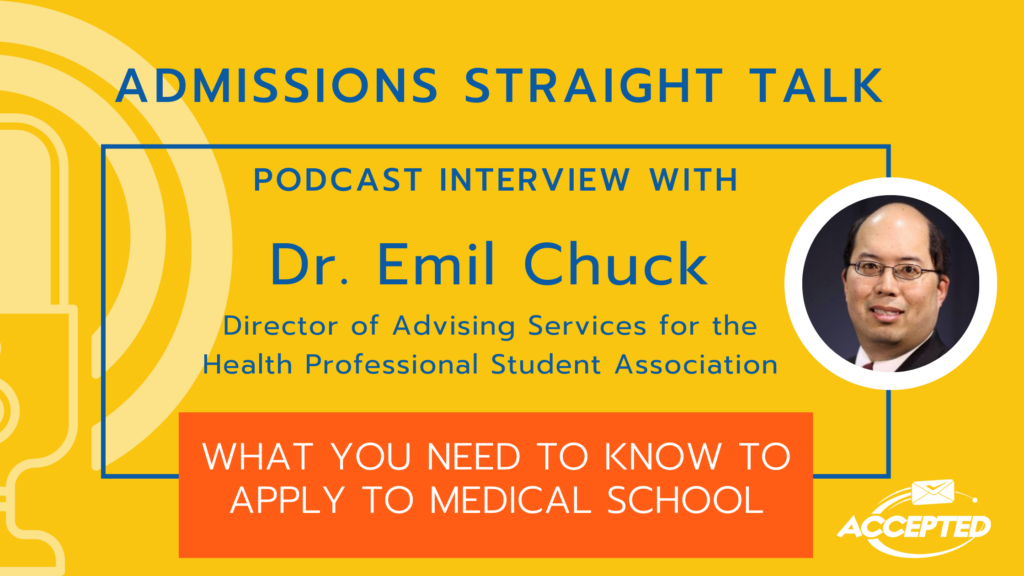
Show Summary Would you like to hear insight based on decades of experience, both advising applicants to a variety of healthcare programs and working in admissions offices for, again, many different healthcare programs? Well, today’s episode is the ticket for you. Dr. Emil Chuck, Director of Advising Services for the Health Professional Student Association is…
University of Washington School of Medicine Secondary Application Tips and Deadlines [2023-2024]

Given that the University of Washington School of Medicine (UWSOM) is ranked number-one in primary care by U.S. News & World Report, it looks for applicants who have a strong interest in patient education and community health. It is also committed to serving the needs of the citizens of Washington, Wyoming, Alaska, Montana, and Idaho…
The Casper Exam: A Situational Judgement Test
GPAs. MCATs. CARS. AACOMAS. AMCAS. PREview. The abbreviations and acronyms you need to wade through on your journey to medical school can seem endless. Here’s another one: the Computer-based Assessment for Sampling Personal Characteristics – Casper for short. This situational judgment test (SJT) is designed to assess core competencies related to social intelligence and professionalism,…
Strategy for Writing an Accomplishment Essay (with examples)

Maybe you’re familiar with macros – the nutrients your body needs to function. Achieving the proper balance of macros leads to optimal health. When it comes to writing your MBA personal statements and application essays, it might be helpful to think of your accomplishments as the carbohydrates, protein, and fat – in other words, the…
Writing Your PA School Personal Statement with Impact [Including a PA Personal Statement Example]

There are approximately 300 accredited PA (physician assistant) schools in the United States. In the most recent application cycle, these schools received more than 27,000 applications. The matriculation rate for PA schools hovers near 30%, which is lower than the approximate 40% matriculation rate for medical schools. Is becoming a PA a competitive process? Yes!…
Get Off That Waitlist!

Landing on a school’s waitlist can be disappointing and even nerve-racking. As a result, waitlisted applicants sometimes let their anxiety or disappointment cloud their thinking, but if you’re waitlisted, try to stay calm and focused. Remember, if you’ve been waitlisted, you have not been rejected. If you play your cards right, you still have a…
All You Need to Know about the New Frist College of Medicine [Episode 558]
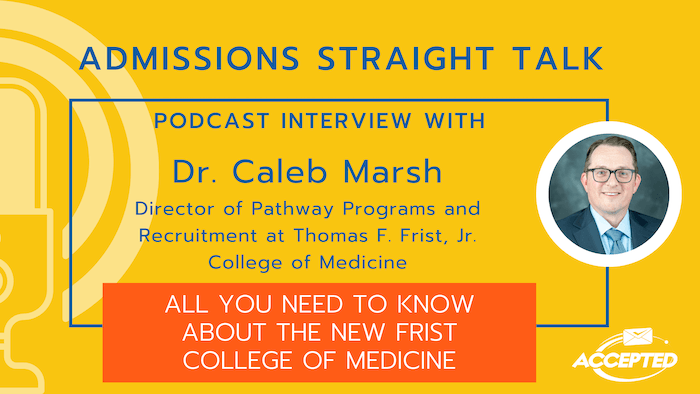
Show Summary Let’s learn about the newest medical school in the United States in this interview with Dr. Caleb Marsh, the Director of Recruitment and Pathway Programs of Belmont University in Nashville, Tennessee. Not only that, but Frist is still accepting applications for its inaugural class matriculating this summer. In this conversation, Dr. Marsh details…
Med School Applications Kick Off: Ten Tips to Get You Through the Season

Getting ready to apply to medical school? This can be a hectic time as you try to stay on top of everything. Here are ten tips to help you hit the ground running: 1. Get cozy with AMCAS/AACOMAS. These two services – the American Medical College Application Service (AMCAS) and the American Association of Colleges…
Should You Consider a Caribbean Medical School?

If the application season isn’t going as you’d hoped, your thoughts might be turning to alternative ways of advancing your medical education. Perhaps you’re thinking about retaking the MCAT, boosting your GPA with postbaccalaureate coursework, or spending a year in a clinical or research environment. Or you might be thinking about warm tropical breezes and…
Advice for Applicants: Moving from 2023 to 2024 [Episode 557]
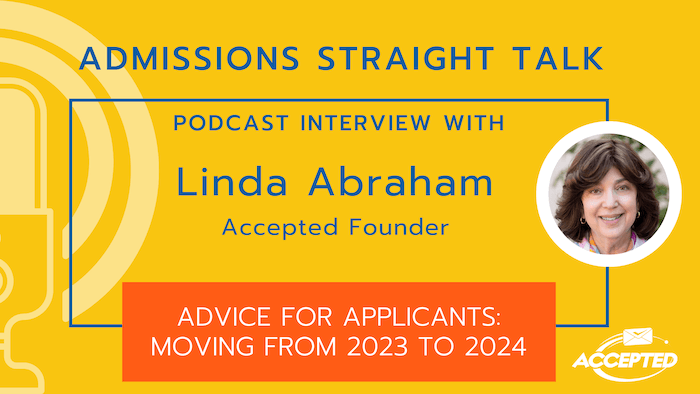
Show Summary In this episode of Admissions Straight Talk, host Linda Abraham looks back at her predictions for the 2023/2024 application cycle and offers advice for current and future applicants. She reflects on her previous predictions, such as the increase in test options and waivers and the continued use of rankings in admissions. She also…
The Women’s Guide to Dressing for Medical School Interview Success

In a medical school interview, your first impression is often the only impression you get to make. With just a handshake, your aim is to come across as professional, confident, and trustworthy. After all the hard work you have put into your premed journey, this is your moment to shine as the outstanding applicant you are….
A Strategic Guide for Applying to Medical School
When premed students contact us about guiding them through the medical school application process, many of their questions are related to timing. “When should I …?” is a frequent question starter. Although no one single answer applies to everyone, here are the guidelines we use when advising our medical school clients. When should I apply…
Are You Toast? – Med School Admissions Officers Reveal Interview Timeline [Episode 555]
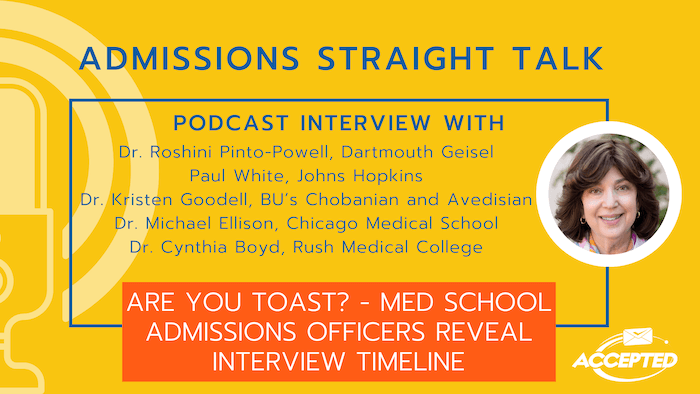
Show Summary In this episode of Admission Straight Talk, host Linda Abraham addresses the concerns of medical school applicants who have not yet received interview invitations. She debunks the myth that not receiving an invitation by Thanksgiving means rejection and shares insights from several admissions directors. She offers tips for both current med school applicants…
- « Previous Page
- 1
- 2
- 3
- 4
- …
- 58
- Next Page »