




As we have come to expect with the U.S. News & World Report ranking, movement is the name of the game. This year, the Stanford GSB has found its way back to the top of the list, tying with Wharton for the #1 spot, while Harvard takes its place at #6, and Michigan Ross exits…
So You Want to Do an MBA Outside the U.S. [Episode 572]
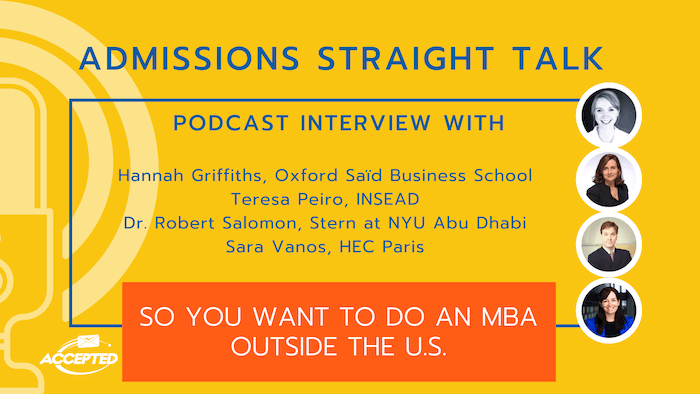
Show Summary In this episode of Admissions Straight Talk, Linda Abraham interviews admissions directors from MBA programs outside the United States to find out if there are any common threads among them. The guests on the show include representatives from Oxford Saïd Business School, INSEAD, NYU Abu Dhabi, and HEC Paris. The interviews cover various…
How to Prepare for Medical School: Four Important Things to Know Before Applying
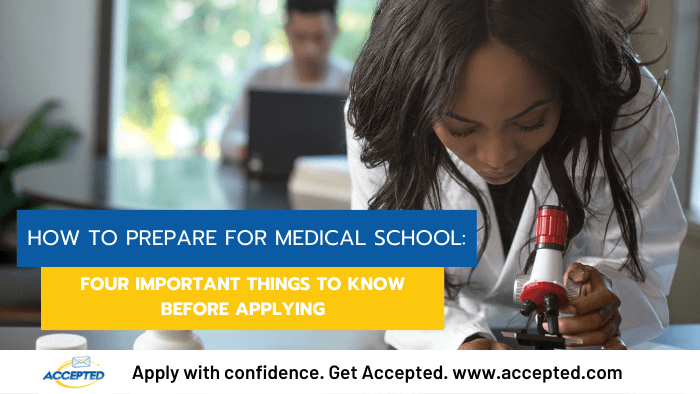
Before he was Joshua Wienczkowski, MD, a prevention and addiction medicine specialist, he was a premed juggling coursework and extracurriculars and trying to make the right choices for his best shot at medical school. During his first year of medical school, he looked back on these choices with a critical eye. “When you burn through…
Tips for Getting into Medical School When Your Parent Is a Doctor

There has been an interesting shift in medical school admissions for applicants whose parents are doctors. In 1989, these applicants were 15% more likely to get into medical school. Ten years ago, students who had a physician for a parent were still more likely to get accepted into medical school. Ten years later, the opposite…
Reserve Your Spot at Case Western Medical: An Interview with Christian Essman [Episode 571]
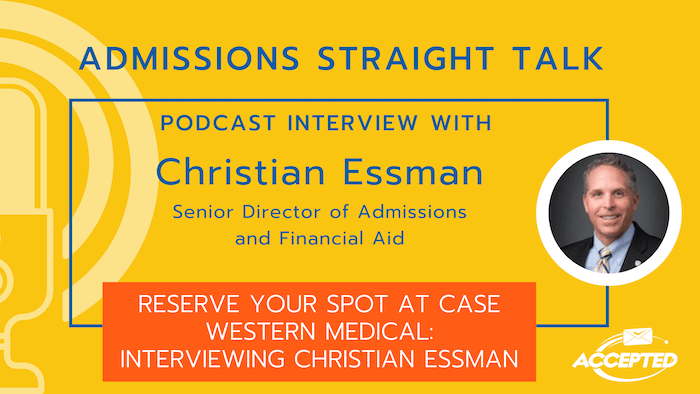
Show Summary In this episode, Linda Abraham interviews Christian Essman, Senior Director of Admissions and Financial Aid at Case Western Reserve University Medical School. They discuss the unique aspects of Case Western’s three MD programs, the significance of research in the application process, and what makes an applicant stand out. Christian emphasizes the importance of…
Acing the PsyD Interview: The 3-P Plan

Congratulations! You have successfully made the cut and been invited to interview. You are among the doctor of psychology (PsyD) applicants who are being seriously considered for acceptance. However, this is not the time to sit back and relax. As you start getting ready for your interview, ask yourself the following: None of these questions…
Five Tips for Applying for Stanford’s Knight-Hennessy Scholarship
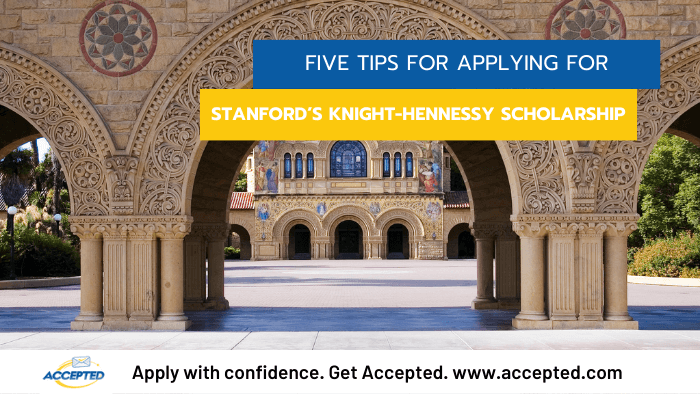
What is the Knight-Hennessy Scholarship? The Knight-Hennessy Scholarship provides up to three years of funding for any graduate degree at Stanford University, as well as community support and leadership development. As you might have guessed, it is a highly competitive scholarship. However, if you are applying to a graduate program at Stanford, it is extremely worthwhile to…
What to Expect After Medical School

For this section of our Med School Admissions: What You Need to Know To Get Accepted series, I’ll provide a brief rundown of what happens after you graduate from medical school. As you have probably realized by now, medicine requires a commitment to lifelong learning. There will always be new procedures, new medications, and new…
Applying to PhD Programs: When, Where, How, and Why?

So, you are thinking you might want to pursue a PhD. That’s great! However, it can sometimes be difficult to decide whether to really go for it. Maybe you are weighing the time commitment required or the prospect of leaving a job you love. Maybe you are wondering whether you are prepared for such an…
Former Wharton/Lauder Admissions Director Joins Accepted: Welcome Kara Keenan Sweeney [Episode 570]
Show Summary MBA admissions veteran Kara Keenan Sweeney has joined Accepted. Formerly part of the admissions team at Wharton Lauder, INSEAD and Columbia Business School, she’s not only an Accepted consultant but she’s our guest on the podcast. Kara discusses various aspects of the MBA application process, including choosing the right schools, handling common challenges…
EMBA: The Ultimate Guide for Applicants

So, you’re considering an EMBA? Congratulations on considering this next step in your educational and professional journey! Yes, the road to an Executive MBA (EMBA) can be complicated and unwieldy – especially if you’ve been out of the academic loop for a long time. But on the positive side, I have worked with so many clients…
How to Choose the Right Graduate School

Many people who are thinking about advancing their skills or changing their career direction via a graduate degree believe they must attend a “prestigious” grad school – one that is ranked highly in the surveys conducted by U.S. News & World Report, Bloomberg Businessweek, and other media outlets. These candidates apply to the schools in…
Six Ways to Mitigate Low Stats in Your MBA Application

Your GMAT score and undergraduate GPA are crucial components of your application when applying to an MBA program. These numbers often indicate your academic ability and potential for success in graduate business studies. The introduction of the GMAT Focus Edition, with its new scoring mechanism, presents a fresh perspective for admissions committees as they evaluate…
How to Write a Compelling Postbac Admissions Essay

One of the most important parts of your application to postbac programs will be your personal statement. This piece of writing allows the admissions committee to get to know you and understand your path to medicine. Three attributes of a compelling postbac personal statement Three important elements can make your postbac personal statement resonate with your reader:…
Tulane Medical School: How to Get In [Episode 569]
Show Summary Would you like to apply to Tulane University School of Medicine, but are you concerned about the intense competition for seats? Its Director of Admissions, Dr. Mike Woodson, is our guest today, and he’ll tell you what it takes to get in. Dr. Woodson discusses the unique aspects of Tulane’s medical program, including…
Vanderbilt University School of Medicine Secondary Application Essay Tips [2023-2024]
Vanderbilt University School of Medicine Secondary Application Essay Tips [2023-2024] The Vanderbilt University School of Medicine places special emphasis on the relationships formed during medical school between classmates and faculty. Students join one of four colleges on campus to participate in small group learning activities. In their first two years of medical school, students create their own…
Whatever You Do, Do Not Leave the Law School Optional Essay Blank!

Many law schools invite applicants to share more about themselves through an optional essay. For example, the University of Pennsylvania Law School provides the following optional essay prompts: Are these essays truly optional? Technically, yes, they are; it says so right there in the name. However, the only truly optional essay here is the one…
Ten Tips for Short-Listing and Visiting B-Schools

You’re about to make one of the biggest decisions of your life. It will determine your future in so many ways: where you might work, where you could live, and the people who will become a part of your life. Choosing a business school is serious business! But it’s also a huge opportunity to turn…
Should I Take a Gap Year Before Medical School?

Most students (44.8%) who took gap years did so for one to two years, 15.2% did so for three to four years, and 8.5% did so for five or more years. Clearly, the takeaway from this study is that more medical students who were accepted for 2021 admission took gap years than those who did…
Which MBA Option Is Best for You: Full-Time, Part-Time, EMBA, or Online?

At its core, the MBA is a business administration graduate program for professionals seeking knowledge, skills, a credential, and a network to help them advance in business and maximize their career performance. Although the term “MBA” makes many people automatically think of a two-year, full-time program, in recent years, the variations on the MBA theme…
- 1
- 2
- 3
- …
- 146
- Next Page »